
Search Wisconsin Divorce Decree
A Wisconsin Divorce Decree search usually begins with a name and a rough year, but it only works well when you also know where the county court file lives. In Wisconsin, the decree is the final circuit court judgment, not the shorter divorce certificate. That distinction shapes every search. Use the statewide court tools to identify the case, then move to the county file that granted the divorce when you need the signed judgment, certified copy, or exact order language tied to a Wisconsin Divorce Decree request.
Wisconsin Divorce Decree Overview
Wisconsin Divorce Decree Search
The best statewide starting point is Wisconsin Circuit Court Access. The research explains that WCCA provides access to certain public records from Wisconsin circuit courts and reflects the case information entered by court staff in the counties where the files are located. For a Wisconsin Divorce Decree search, that means you can search by party name, business name, or case number, then narrow by county, case type, filing date range, and case status. Results usually show the case number, filing date, party names, status, judge assignment, and the docket trail of hearings and filings. That is enough to move from a vague name search to a focused county-level request.
The public portal is still only part of the Wisconsin process. Full text documents are generally not available for download through WCCA, and older cases can have limited electronic detail. The research also notes that sealed, expunged, juvenile, and pre-judgment paternity matters are not part of normal public searching. Financial disclosure materials are generally not accessible online either. So the Wisconsin Divorce Decree search path works best when you treat WCCA as a locator. It tells you which county file to target and what the final judgment entry may be called. The actual decree still belongs to the county circuit court file that granted the divorce.
The WCCA source is the core statewide search image because it reflects the first stage of most Wisconsin Divorce Decree research.
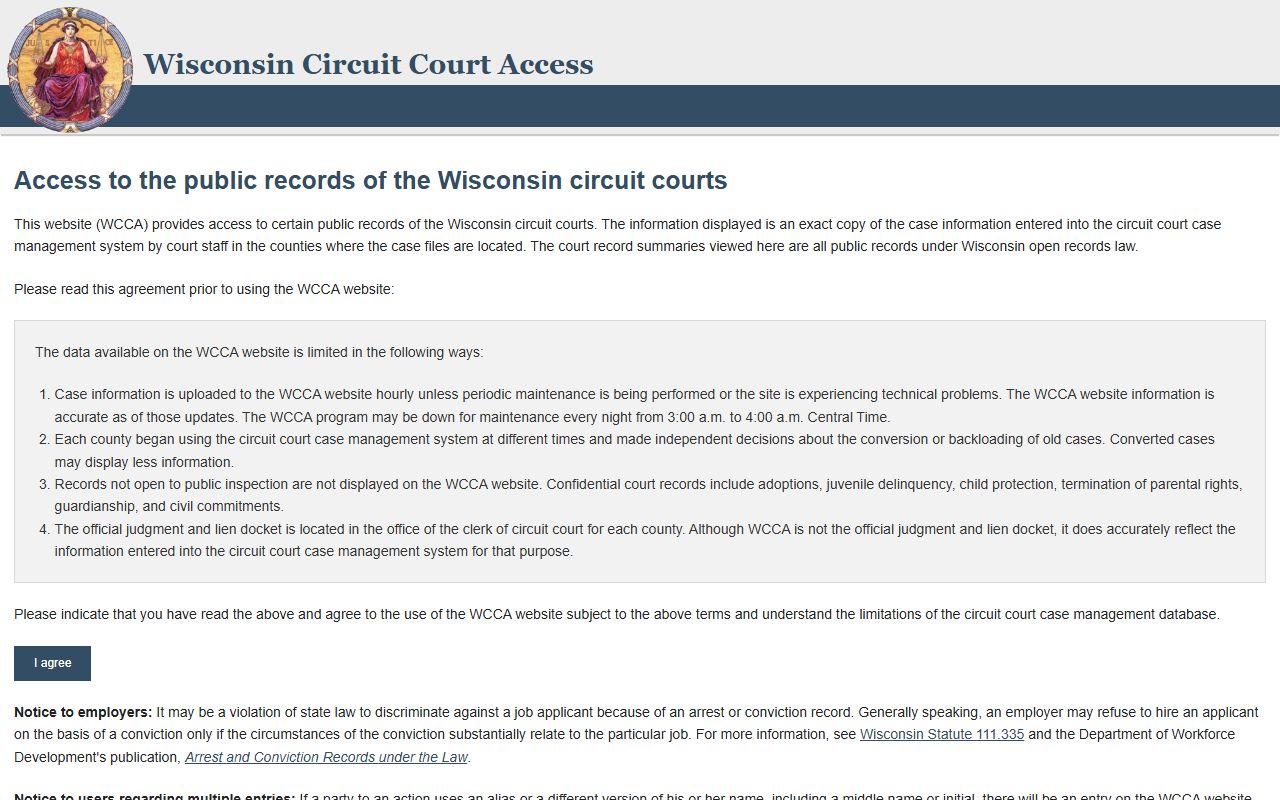
The screenshot belongs at the top of the process. It shows the statewide public portal that helps locate the county case before any copy request is made.
Wisconsin Divorce Decree Sources
A Wisconsin Divorce Decree search depends on four different source types, and each one has a different role. WCCA helps find the case. The Wisconsin Court System homepage acts as the statewide orientation page that connects users to public court tools, forms, and service information. The circuit court forms library explains the names of the papers that usually appear in a family case. The Wisconsin Vital Records Office handles divorce certificates. The Wisconsin State Law Library helps users interpret records, statutes, and local court rules. That mix matters because a Wisconsin search can fail even when the record exists, simply because the requester aimed at the wrong office or the wrong document type.
The Court System homepage is also useful because it reminds users that a city or county page is only one part of the larger Wisconsin framework. The state site links together the public record tools and support pages that surround a Divorce Decree search.
The Wisconsin Court System homepage provides that statewide orientation and matches the image below.
The homepage image works as a statewide anchor because it shows where many Wisconsin users start when they are not yet sure which county file holds the decree.
Wisconsin Divorce Decree Copies
The research makes one point very clear. The Wisconsin Vital Records Office maintains divorce certificates from October 1907 to the present, but it does not maintain divorce decrees. Those decrees are kept by the Clerk of Circuit Court in the county where the divorce was granted. That distinction should shape every Wisconsin Divorce Decree request. A certificate can confirm that a divorce occurred. It does not replace the final judgment. If you need the exact court order, the county circuit court file is the controlling source.
Wisconsin also began statewide issuance of divorce certificates on January 1, 2016. The research says any Register of Deeds office in Wisconsin can issue a divorce certificate for any county if the divorce occurred on or after that date. For earlier divorces, the state office or the county where the divorce occurred may still be the right certificate source. That gives Wisconsin users a clean way to divide the task. If the need is proof of divorce, the certificate route may be enough. If the need is the court judgment language, the county clerk file is the only source that matters. That split is simple, but it prevents a large share of bad requests.
The Wisconsin Vital Records Office is the statewide certificate source in the research and matches the image below.
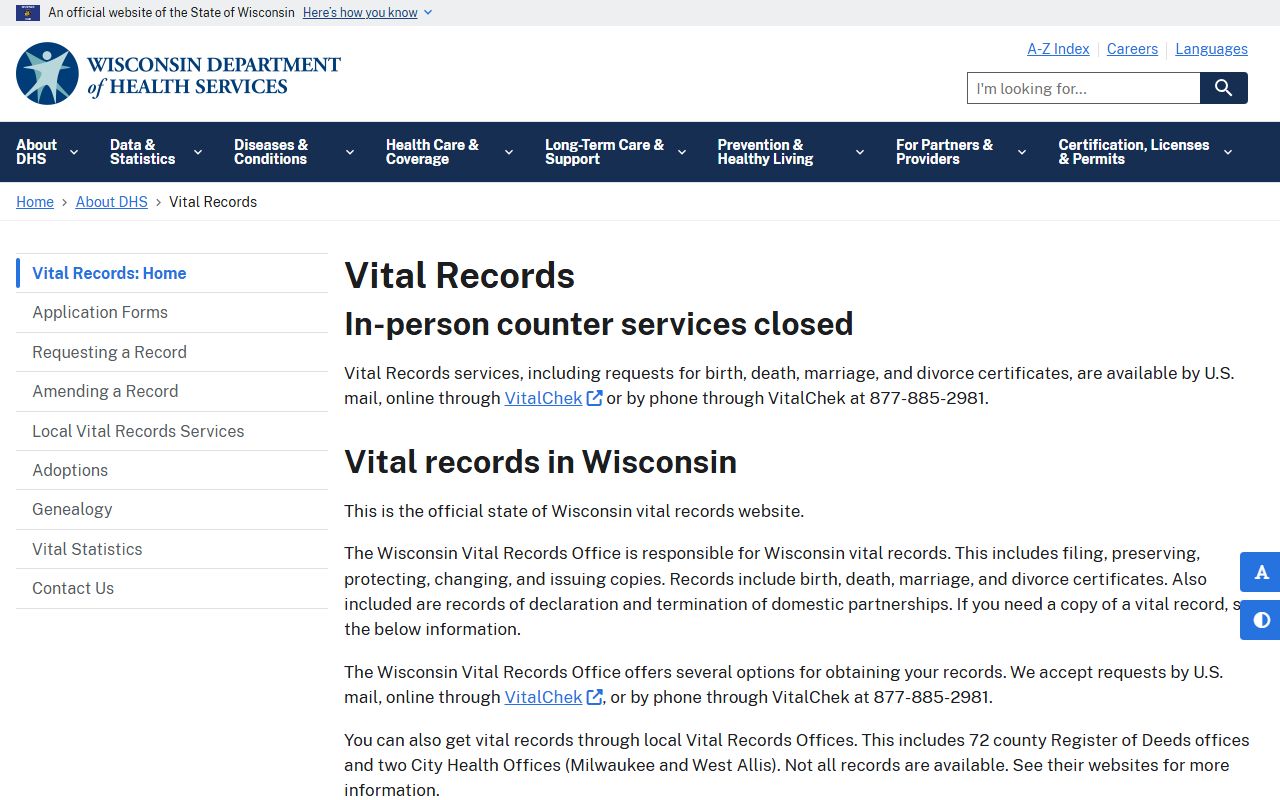
The image belongs in the certificate section because it reinforces the state-level path for verifications and certificates while keeping the Wisconsin Divorce Decree itself tied to the county file.
Wisconsin Divorce Decree Forms
The forms library is one of the best tools for understanding what may appear in a Wisconsin Divorce Decree file. The research identifies the Petition for Divorce, Summons and Petition, Financial Disclosure Statement, Marital Settlement Agreement, and Judgment of Divorce as core family-law forms used across Wisconsin circuit courts. Those titles matter because the public docket often uses short labels. If you are not sure whether the final paper you need is the decree, the judgment, or another family-law filing, the forms page can help you connect the docket entry to the full document title. That is useful for self-represented users and for people searching older family cases alike.
The forms site also lets users browse by case type or search by keyword and form number, and the research says many family-law forms can be completed electronically or printed. Spanish versions are available for many family forms as well. That makes the library more than a filing page. It is also a naming tool for Wisconsin Divorce Decree research. When paired with Chapter 767, it gives users both the paper trail and the family-law framework that explains why the final judgment matters.
The Wisconsin circuit court forms library matches the image below and helps identify the filings that usually lead to the final judgment.
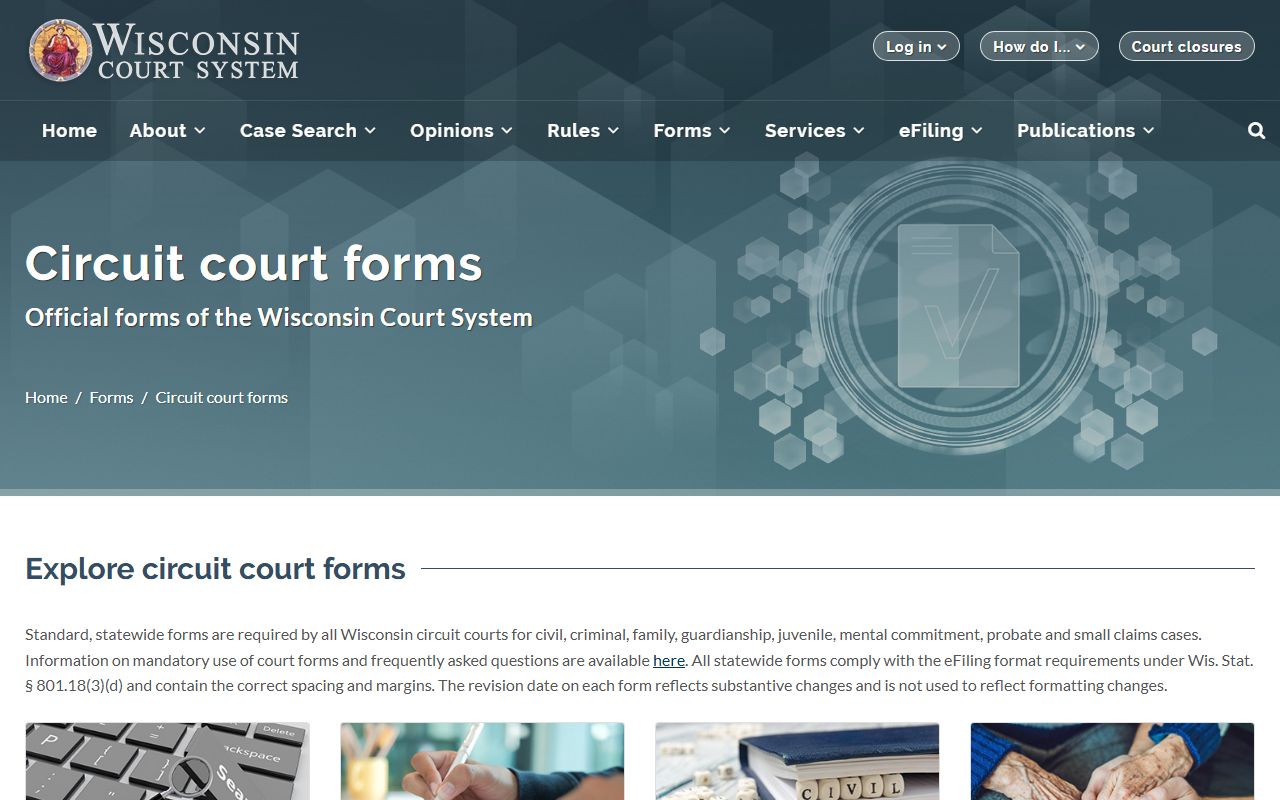
The forms image supports the search because form names are often the fastest way to recognize the correct Wisconsin Divorce Decree entry in the docket.
Wisconsin Divorce Decree Laws
Wisconsin family actions are governed by Chapter 767 of the Wisconsin Statutes. That chapter covers the structure of actions affecting the family and provides the statutory framework behind every Wisconsin Divorce Decree. Within that chapter, section 767.301 addresses Wisconsin residency and county residency rules for filing. Section 767.315 states the no-fault ground that the marriage is irretrievably broken. Section 767.335 covers the waiting period before the divorce can be finalized. Section 767.61 addresses property division, and section 767.41 governs custody and placement standards.
Those laws matter on a records page because they explain what the final Wisconsin judgment may contain and why the decree is often the key record when a person needs exact terms. The same research also ties public court access to Wisconsin Statute 19.31 to 19.39, which frames public records access, and to Chapter 814, which governs court-fee and copy-fee structure. A user does not need to read every statute to request a Wisconsin Divorce Decree, but knowing where those rules sit makes the search more coherent and helps users understand why some materials are easy to locate while others remain limited or require a direct clerk request.
The statewide eFiling system at Wisconsin eFiling fits here because it shows the modern filing side of Wisconsin circuit court practice, even though many decree requests will concern older files that still have to be retrieved from county court records.
The eFiling image supports the law section by connecting the statutory framework to the present-day court process surrounding Wisconsin family cases.
Wisconsin Divorce Decree Help
The Wisconsin State Law Library is one of the most useful support resources for a Wisconsin Divorce Decree search that has stalled. The research says the library offers free legal research assistance, maintains guides on court records, and provides a guide called Understanding the Wisconsin Circuit Court Records Website. Librarians can help users locate statutes, case law, court rules, county-specific resources, and self-help material. That support is practical because many search problems are really interpretation problems. The user can see a docket entry but does not know whether it reflects the final decree, an amended judgment, a stipulation, or another family-court filing.
The research also notes that the Wisconsin State Law Library has locations in Madison, Milwaukee, and the Dane County Legal Resource Center. That statewide spread gives Wisconsin users several public access points for legal research help. The library does not replace the county clerk or issue certified copies, but it helps users aim the request correctly and understand the larger record trail.
The Wisconsin State Law Library also matches the image below and reflects the research side of the Wisconsin Divorce Decree process.
The image belongs here because many Wisconsin searches move faster once the requester understands the docket, the statute references, and the difference between a certificate and the final decree.
A straightforward Wisconsin search often follows the same sequence:
- Search WCCA using a spouse name, county, or case number.
- Confirm the county where the divorce was granted.
- Use the forms library to identify the judgment or decree title.
- Use the county Clerk of Circuit Court for the final Wisconsin Divorce Decree.
- Use the Vital Records Office only when a certificate is enough.
- Use the law library when the docket language or statute references are unclear.
That sequence works because each source has a different role. The public docket locates the case. The forms page explains the filing names. The law library clarifies the legal framework. The county clerk holds the actual court judgment.
Wisconsin Divorce Decree Access
Wisconsin Divorce Decree access is still county-based even when the search begins statewide. That is why this site is organized by both county and city. County pages focus on the office that keeps the record. City pages help users translate where they live into the county that likely holds the file. If you already know the county where the divorce was granted, go straight to the county page. If you only know the city tied to the case, use the city page first and then move to the county file once the location is clear. The stronger the location match, the easier the request becomes.
Major Wisconsin cities can also serve as practical starting points when the county is not yet certain. Use a city page to narrow the record path before you contact the county office that holds the decree.