
Dane County Divorce Decree
Dane County Divorce Decree searches usually begin online, then move to the circuit court file when you need a signed copy. WCCA is the fast public check for case status, docket notes, and filing dates, but the certified decree still lives with the court record in Dane County. That split matters when a bank, a title company, or another court asks for proof. If you know the case number, the search gets easier. If you only know the names, Dane County records can still be narrowed down with the right filters and a little patience.
Dane County Divorce Decree Search
Wisconsin Circuit Court Access is the first place most Dane County users should look. You can search by party name, business name, or case number, then narrow the results by county, case type, filing date range, and case status. The portal shows the case number, the filing date, the parties, the judge, and a running docket of hearings and filings. That gives you a clean snapshot of a Dane County Divorce Decree case without making you dig through the courthouse file first.
WCCA is useful, but it has limits. It does not offer full-text document downloads. It also leaves out sealed matters, expunged cases, juvenile cases, and pre-judgment paternity cases. Older Dane County files can be thin online, especially those filed before about 2000. The system updates hourly, so very recent entries may still be in motion. For a divorce decree search, that means the portal is a locator, not the final record source.
When a result looks close but not exact, keep the search broad for a moment. County name, filing year, and case type can help separate a divorce decree from another family case with the same spouse name. If the docket summary looks promising, the clerk can use that information to pull the right file much faster.
Dane County Divorce Decree Records
A Dane County Divorce Decree record is not the same thing as a divorce certificate. The Wisconsin Vital Records Office keeps divorce certificates from October 1907 to the present, but it does not keep the decree itself. Decrees stay with the Clerk of Circuit Court in the county where the case was granted. That distinction matters in Dane County because the certificate can confirm a divorce, while the decree is the signed order people usually need for legal follow-up.
The state certificate rules also matter when a Dane County search reaches past the courthouse. Since January 1, 2016, any Wisconsin Register of Deeds office can issue a divorce certificate for eligible divorces that occurred on or after that date. Older records may still live with the state office or the county office where the divorce happened. The fee pattern is simple enough to remember: $20 for the first certified copy and $3 for each additional copy ordered at the same time.
If you are only trying to confirm the event, the certificate may be enough. If you need the actual final order, keep the focus on the county court file. Dane County researchers often need both records at different stages, so it helps to separate the proof of divorce from the decree that explains what the court decided.
Dane County Divorce Decree Forms
The Wisconsin Court System keeps the circuit court forms at Wisconsin Circuit Court Forms. That page is the right place to find the family-law forms used in a Dane County divorce case, including FA-4101, FA-4102, FA-4139, FA-4150, and FA-4140. The forms are approved by the Wisconsin Supreme Court, and they are the standard papers people use to start, support, and finish a case. If you are checking a Dane County Divorce Decree file, the forms page is often the best way to make sense of the paper trail.
The Wisconsin Court System home page at Wisconsin Court System is also worth using because it puts WCCA, forms, eFiling, and self-help links in one place. That is handy when a Dane County Divorce Decree request touches more than one step. The page below comes from that site and shows the court system entry point many people use before they move on to the county file.
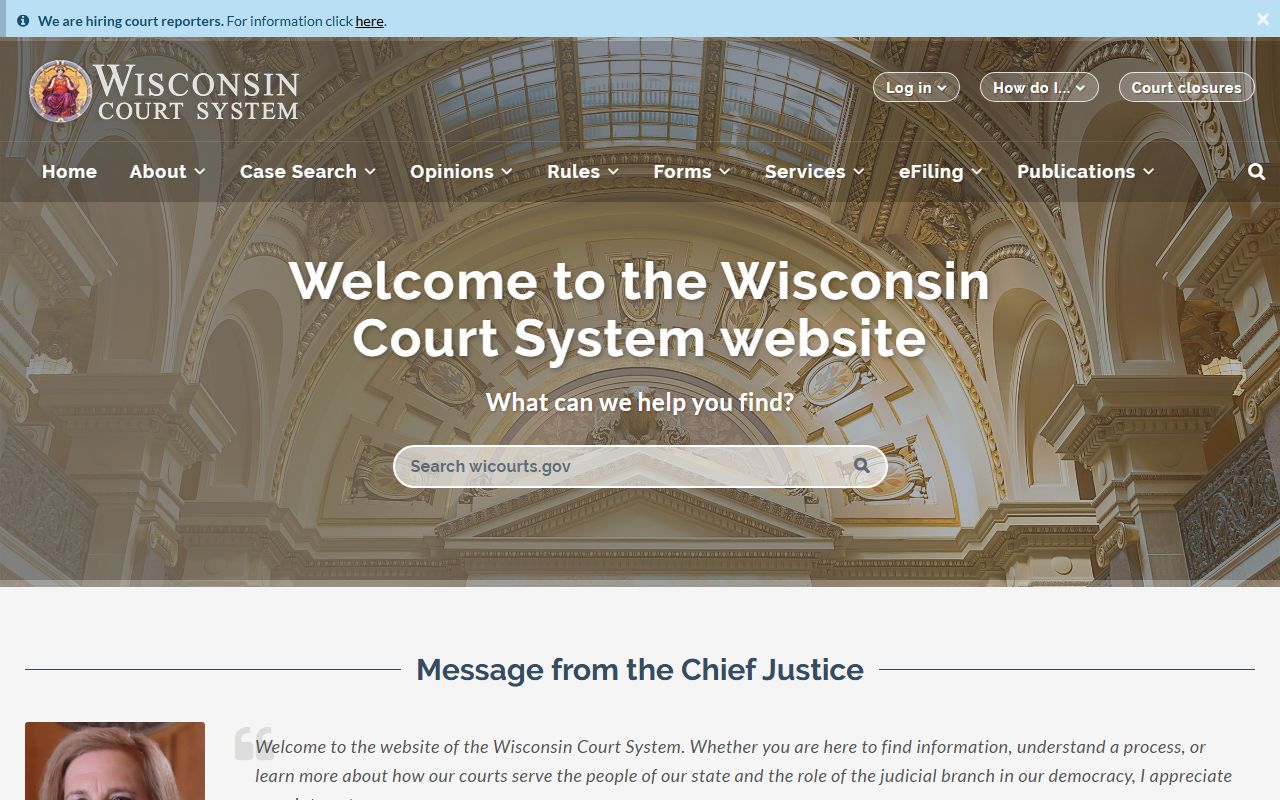
The image points to the state court system, but the real value is the workflow behind it. Dane County users can read the form instructions, check the filing status, and keep the final decree request tied to the same case. That saves time, especially when the divorce is handled without an attorney or when the final judgment needs a fresh copy years later.
eFiling can also matter in Dane County because it routes filings to the clerk once they are submitted. That does not replace the decree copy request, but it does help keep the case record current. When the form set is complete and the filing is accepted, the county file is easier to track and the final order is easier to locate.
Dane County Divorce Decree Copies
Copy fees come from Wis. Stat. ch. 814, and that chapter is the one to remember when a Dane County Divorce Decree request turns into a cost question. Certified copies are handled by the clerk, plain copies are cheaper, and a search fee can apply when you do not have the case number. The statute also covers the cost of uncertified pages. In practice, that means a clear request saves time and often saves money too.
If you are trying to decide between a divorce certificate and a decree copy, the fee page helps only after you know which record you need. The Wisconsin Vital Records Office can issue certificates, but a decree copy still comes from the county court file. Dane County users often start with the certificate because it is easier to order, then come back for the decree when a lender, employer, or another court needs the signed order itself. That is a common path, but it is not a shortcut around the county file.
Good requests are specific. Use the spouse names as they appear in the case, add the filing year if you know it, and include the case number whenever possible. A neat request tells the clerk exactly which Dane County Divorce Decree file to pull. If you need more than one copy, ask at the same time so the clerk can price the order correctly under the statute.
Dane County Divorce Decree Help
The Wisconsin State Law Library is a useful support point when a Dane County Divorce Decree search gets stuck. The library provides help with WCCA, county court rules, statutes, and family-law research. It does not give legal advice, but it can help you read a docket line, find the right chapter, or understand what a case summary is really showing. That makes it a strong second stop after the public search page.
Dane County has a practical advantage here because the state law library includes the Dane County Legal Resource Center. That local presence can be helpful if you want in-person research support or public terminals for looking up court materials. It also makes Dane County records work feel more connected to the state system, which is useful when you are moving between a public docket, the forms site, and the county court file.
For broader divorce research, Wis. Stat. ch. 767 is the chapter that frames the family case itself. It covers the divorce action, property division, custody, and support rules that sit behind the decree. When you pair that chapter with the records tools, the Dane County Divorce Decree search becomes much more manageable.