
Find Taylor County Divorce Decree
Taylor County Divorce Decree searches are easier when the record type is clear before the search begins. A decree is the final court judgment in the case. A certificate is a separate vital record used for limited proof. The public case portal can help identify the file. The county court record remains the source for the decree itself. The state vital-records path can issue certificates for qualifying requests, but it does not replace the county court file. If the goal is a certified Taylor County Divorce Decree, the search needs to stay focused on the county court record after the public lookup step.
Taylor County Divorce Decree Basics
Taylor County Divorce Decree Search
Wisconsin Circuit Court Access is the main public starting point for a Taylor County Divorce Decree search. The portal can be searched by party name, business name, or case number, and its advanced filters narrow results by county, case type, filing date range, and case status. That gives Taylor County users a practical way to move from a broad search to a specific case file even when the available details are limited.
The public results can show filing dates, party names, judge assignment, case status, and docket entries. That information matters because it identifies the case. It still does not replace the decree. The research explains that WCCA does not usually provide full-text document downloads. A Taylor County Divorce Decree request therefore still needs a county file step when the user wants the final signed judgment or a certified court copy.
The limits of the portal matter too. Coverage before about 2000 may be sparse. Sealed cases, juvenile matters, expunged records, and pre-judgment paternity files are excluded. The information is uploaded hourly unless maintenance or technical problems interrupt the cycle. Those limits explain why a public search may confirm the case while the actual decree request still belongs with the county clerk.
Note: Use WCCA to identify the Taylor County case, then use the county clerk to request the certified Divorce Decree.
Taylor County Divorce Decree Records
Wisconsin Vital Records provides the key distinction for Taylor County users. The state keeps divorce certificates from October 1907 to the present. It does not keep divorce decrees. Those stay with the Clerk of Circuit Court in the county where the divorce was granted. That means the final Taylor County Divorce Decree remains a county court record even when a certificate request could be handled through a statewide office.
The certificate route is still useful because some users only need proof that a divorce occurred. The research says the first certified copy costs $20 and each additional copy of the same record ordered at the same time costs $3. Statewide issuance began on January 1, 2016 for eligible divorce certificates. That helps when a certificate is enough, but it does not move the decree out of the county court file.
The state vital-records source is the fallback image reference on this page because Taylor County image assets in the project are flagged and cannot be used under the site rules.
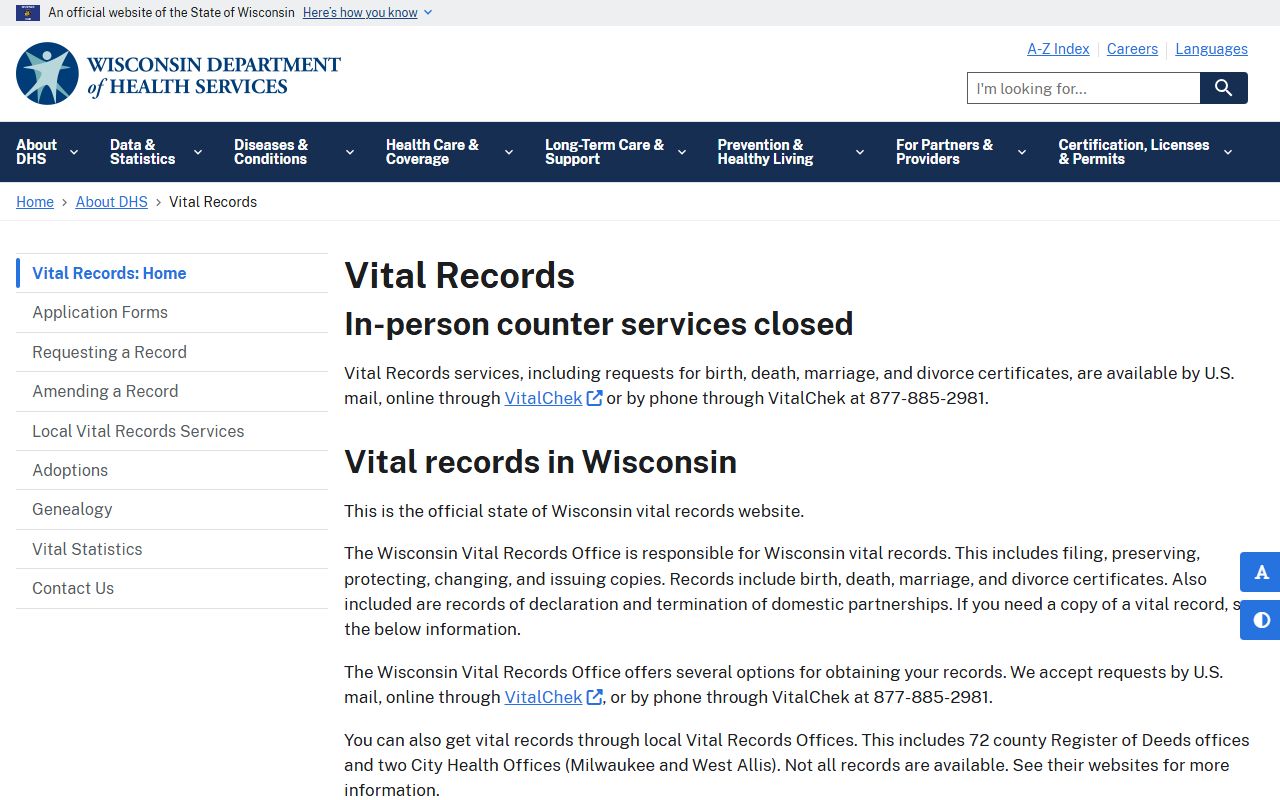
The image supports the certificate side of the records path, while the decree itself remains part of the county court file and not part of the state certificate archive.
Taylor County Divorce Decree Forms
The Wisconsin circuit court forms library gives Taylor County users the filing names that commonly appear in a divorce case. The research lists the Petition for Divorce, Summons and Petition, Financial Disclosure Statement, Marital Settlement Agreement, and Judgment of Divorce forms. Those names matter because they help users read the docket and identify which filing is likely to be the final judgment rather than an earlier step in the case.
The forms page is useful for both current filing work and old records research. It can be searched by keyword or form number, and the forms are available in PDF format. Some family-law forms are available in Spanish as well. That gives Taylor County users a practical way to compare the public case summary to the paperwork likely in the file and to narrow the request before asking the county clerk for a copy.
Family actions in Wisconsin are governed by Chapter 767. That chapter supplies the legal frame, while the forms library supplies the filing names. Together they make a Taylor County Divorce Decree request more precise and easier for the clerk to understand.
Taylor County Divorce Decree Help
The Wisconsin State Law Library is a practical support source when a Taylor County Divorce Decree search gets stuck on an unfamiliar docket entry, a filing label, or a statute reference. The library explains how to use WCCA and points users toward statutes, local rules, and research guides. It does not issue the decree, but it can make the records request much clearer before the county clerk is contacted.
That matters because many search problems are really request problems. A user asks for a divorce record when the needed document is the decree. Another user asks for a certificate when the real need is a court-stamped judgment. For copy fees and related search charges, Chapter 814 provides the statewide fee structure. Knowing that a search, a plain copy, and a certified copy are different services helps a Taylor County user make a better request from the start.
The best path is simple. Search the case. Review the forms if the docket terms are unclear. Use the law library if the public record needs explanation. Then ask the county clerk for the Taylor County Divorce Decree if the final judgment is the actual goal. That order keeps the request focused on the right office and the right record. It also helps prevent the wrong record request and keeps the search moving in the right direction.
Taylor County Divorce Decree Steps
A Taylor County Divorce Decree request works best when each source is used for the right task and the search does not drift between the certificate route and the court file without a reason.
- Search WCCA for the Taylor County case.
- Write down the case number, filing date, and party names.
- Check the forms library for filing names.
- Request the decree from the clerk where the divorce was granted.
- Use vital records only if a certificate is enough.
- Use the law library when the docket needs explanation.
That same method works when the person now lives in Taylor County but the divorce happened in another county. The decree remains with the county that granted the divorce. Keeping that rule in mind prevents wasted time and duplicate records requests. A clear request usually brings a faster answer and cuts down on extra search work. That small detail matters.