
Search Rusk County Divorce Decree
Rusk County Divorce Decree searches usually begin with the public court index, then move to the county clerk for a certified copy. That order matters because the online case summary gives you the file trail, but the decree itself is still the court order in the local circuit court record. If you know the spouse name, the filing year, or the case number, you can narrow the search fast. If you do not, the same statewide tools still help, but the request works best when it stays tied to Rusk County and the right case file.
Rusk County Divorce Decree Search
Wisconsin Circuit Court Access is the first place many people check for a Rusk County Divorce Decree search. The site shows public circuit court data that matches the information entered by court staff, so it works well as a fast case index. You can search by party name, business name, or case number. Advanced search filters also let you narrow by county, case type, filing date range, and case status, which helps when a Rusk County file is all you know by rough year.
The results give you the case number, filing date, party names, case status, judge, and docket activity. That is enough to confirm whether the divorce case is in Rusk County, but it is not the same as the final decree. Full text documents are not offered for download, so treat WCCA as the front door and not the final copy source. If the case is active or recently filed, the public entry may still update hourly, which makes the search useful for a fresh Rusk County check.
Rusk County Divorce Records in WCCA
WCCA is a strong tool, but it has limits. It does not include sealed cases, juvenile matters, or pre-judgment paternity files, and older Rusk County cases may have thin electronic coverage. That is why a Rusk County Divorce Decree lookup often starts online and then ends at the clerk office. If the docket looks short or the file is old, the county court record may hold more detail than the screen shows.
The portal is still valuable because it tells you where to aim next. A Rusk County divorce record that appears in WCCA usually gives enough detail to request the paper file, confirm the parties, and see whether the decree was entered. The site has been online since 1999, but county coverage varies. For a Rusk County search, the cleanest path is to verify the case on WCCA, then use the county clerk when you need the official order.
Rusk County Divorce Decree Forms
The Wisconsin Circuit Court Forms library is where Rusk County users can find the papers that shape a divorce case before the decree is entered. Family law forms include FA-4101, FA-4102, FA-4139, FA-4150, and FA-4140. The site lets you browse by case type or search by form number, which is helpful if you are checking the exact packet before you file or compare it with the county file.
Those forms sit inside Wis. Stat. ch. 767, which covers actions affecting the family. Wisconsin uses a no-fault divorce standard, so the papers focus on the marriage, the parties, property, custody, and support rather than proving fault. That legal structure matters in Rusk County because the decree you ask for later reflects the result of those forms and the final court hearing, not a separate certificate or a simple docket note.
Rusk County Divorce Decree Copies
The Wisconsin Vital Records Office keeps divorce certificates, but it does not keep divorce decrees. That difference matters in Rusk County. If you need the decree, the county Clerk of Circuit Court is the office that holds the court order. If you need a certificate for an identity or timeline question, the state vital records system may be enough. After January 1, 2016, any Wisconsin Register of Deeds office can issue an eligible divorce certificate for any county, but the decree still comes from the court file.
The public search portal at Wisconsin Circuit Court Access is the source behind the image below. It is the same starting point Rusk County users use when they want to match a name to a file and then move on to the certified copy request.
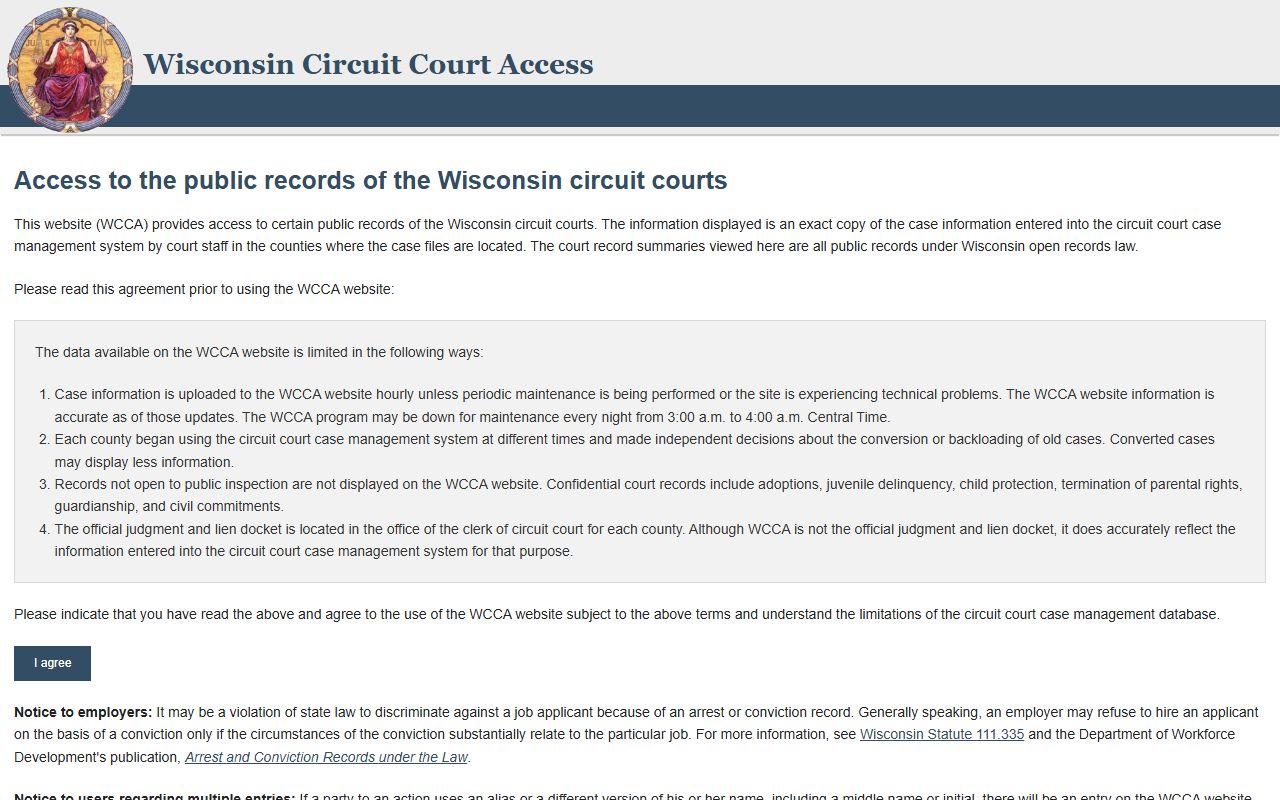
That view is useful because it shows the public side first. Once you have the case number or a close filing date, the local clerk can pull the decree faster and tell you whether you need a certified copy, an uncertified copy, or a search of the file.
Copy fees come from Wis. Stat. ch. 814. A certified court copy costs $5.00, an uncertified copy is $1.25 per page, and a search fee can apply when you do not provide a case number. In Rusk County, that means the cleanest request is usually the one that names both spouses, the county, and the filing year.
Rusk County Divorce Records Help
The Wisconsin State Law Library helps people read the record trail before they ask for a Rusk County Divorce Decree. The library explains how to use WCCA, how to read docket entries, and where to find county court rules. That is useful when a case summary is vague or when you need to know whether the filing ended in a final judgment or a later amendment.
Rusk County users also benefit from thinking in layers. WCCA shows the public case status. The forms page shows the filing packet. The vital records office shows where certificates live. The county clerk holds the decree. When you keep those jobs separate, the Rusk County Divorce Decree search becomes much easier to finish, and the request is less likely to bounce between offices. That makes the final request more precise and easier for the clerk to process.
Rusk County Divorce Records Fees
Rusk County fee questions usually come back to Wis. Stat. ch. 814. The law sets the price for certified copies, uncertified copies, and certain file searches. If you ask the clerk to confirm whether a divorce decree exists and you do not have the case number, the search fee can apply. If you already have the number, the request is usually simpler and cheaper because the clerk can go straight to the right file.
That same statute also allows fee waivers in some cases for people who cannot afford the cost. For a Rusk County Divorce Decree request, that matters when someone is trying to correct a name, prove a remarriage, or settle a property issue. The safest way to save time is to bring the full names used in the case, the approximate filing date, and the county, then ask for the exact copy type you need. Clear details usually cut down on search time and reduce repeat calls.