
Search Lafayette County Divorce Decree
Lafayette County Divorce Decree searches usually begin with the public docket and end with the county clerk when you need the signed order. WCCA can confirm names, filing dates, and case status, which helps when the spelling is uncertain or the year is only approximate. In Lafayette County, that first pass is often the fastest way to separate a divorce case from another civil matter. Once the case number is known, the county file can be pulled with far less guesswork. If you only need proof that a divorce happened, the state certificate path may be enough, but the decree still lives in the county record.
Lafayette County Divorce Decree Search
Wisconsin Circuit Court Access is the main public starting point for a Lafayette County Divorce Decree search. The portal lets you look up a party name, a business name, or a case number, and it also lets you narrow the results by county, case type, filing date range, and case status. That is useful when you know the county but not the exact filing year. It is also useful when a common surname returns more than one result and you need a cleaner way to separate the divorce file from other court matters.
The WCCA view is practical, but it is not the whole record. It gives docket information, case status, judge assignment, party names, and a chronological line of hearings and filings. It does not provide full-text document downloads. Sealed matters, expunged files, juvenile cases, and pre-judgment paternity cases are not part of the public display. Older Lafayette County Divorce Decree files, especially those filed before about 2000, may show limited electronic detail. The system updates hourly unless maintenance or technical trouble interrupts the cycle, so a recent filing may still be in motion when you search.
That is why the online search works best as a map. It helps you confirm that the case belongs in Lafayette County and that the names match the file you want. It also keeps you from asking the clerk to search the wrong county. A clean case number, or even a narrow filing year and a strong docket match, can save time when the decree request reaches the courthouse side of the process.
Lafayette County Divorce Decree Records
A Lafayette County Divorce Decree is a court record, not a vital record certificate. The Wisconsin Vital Records Office keeps divorce certificates from October 1907 to the present, but it does not keep the decree itself. Decrees stay with the Clerk of Circuit Court in the county where the divorce was granted. That distinction matters because a certificate can confirm the event, while the decree is the signed order that shows what the court decided. When the question is legal follow-up, the county file is the record that matters.
The state certificate rules can still help you sort the request. Since January 1, 2016, any Wisconsin Register of Deeds office can issue a divorce certificate for a qualifying divorce that occurred on or after that date. For older records, the state office or the county office where the divorce happened may still hold the certificate. That is useful background, but it does not move the Lafayette County Divorce Decree out of the county file. The county clerk still controls the signed judgment copy.
The state vital records page at Wisconsin Vital Records Office helps show why the county file and the state certificate are separate records.
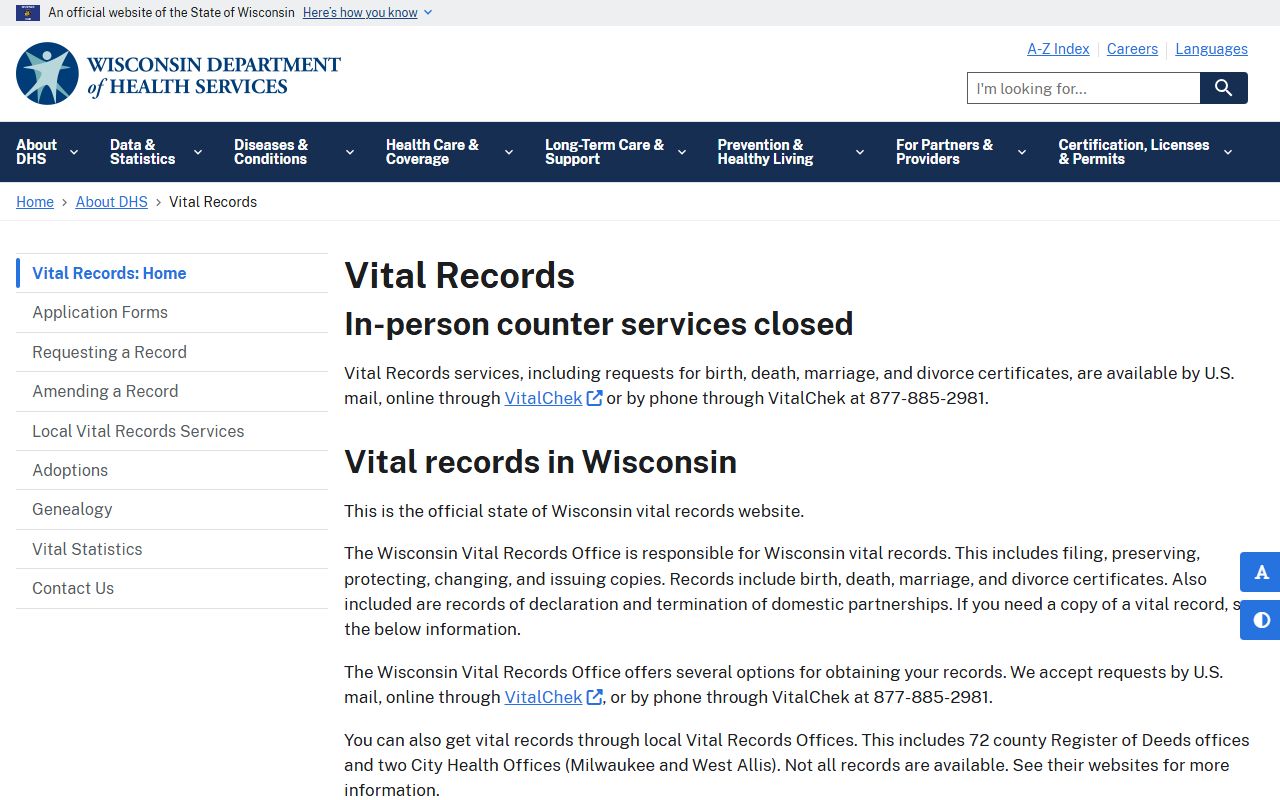
That image fits the Lafayette County Divorce Decree path because it points to the certificate side first and then leaves the final order with the county court record where it belongs.
Lafayette County Divorce Decree Forms
The Wisconsin Court System keeps the circuit court forms at Wisconsin Circuit Court Forms, and that page is the cleanest way to see the paperwork that builds a Lafayette County Divorce Decree case. The family-law set includes the Petition for Divorce, the Summons and Petition, the Financial Disclosure Statement, the Marital Settlement Agreement, and the Judgment of Divorce. Those names matter because they help you tell a pleading from a final order, and they help you read the docket with more confidence.
The forms page also works well for self-represented users who need to know which papers belong in the file before the decree is entered. It lets people browse by case type or search by form number and keyword. That makes it easier to check whether the filing trail looks complete. In a Lafayette County Divorce Decree search, that kind of review is useful because the docket often makes sense only after you know which form was filed and why it was filed.
Wisconsin family actions are governed by Wis. Stat. ch. 767, which frames divorce, property division, custody, and support. The forms page supplies the state-approved paperwork that fits that chapter. Together they explain why the Lafayette County Divorce Decree file includes more than one document and why the final judgment may be just one step in a longer record trail. If the case is still open, the forms also show the structure that leads to the signed decree.
Lafayette County Copy Fees
Copy and search fees follow Wis. Stat. ch. 814. That chapter sets the rules for certified copies, uncertified copies, and court searches when a case number is missing. A certified Lafayette County Divorce Decree copy is the safer choice for official use because it shows the county court file was the source. An uncertified copy can be useful for reading terms, but it is not the same thing as a certified court order. The statute also allows a search fee when the clerk has to look for the record without a case number.
The fee difference matters because many people do not need every record right away. If you are just confirming a filing, WCCA may be enough. If you need proof for a bank, a title issue, or another court matter, the certified decree is the better request. The Lafayette County clerk can price the work more accurately when the request names the record type clearly. That is one reason the words Divorce Decree should appear in the request itself, not just in the background notes.
Good requests are specific. Use the spouse names as they appear in the case, include the filing year if you know it, and add the case number whenever possible. A clean request tells the clerk exactly which Lafayette County Divorce Decree file to pull and reduces the chance of a delay. If you need more than one certified copy, ask at the same time so the clerk can apply the statute correctly and prepare the order in one step.
Lafayette County Research Help
The Wisconsin State Law Library is a helpful backup when a Lafayette County Divorce Decree search gets stuck. The library explains how to use WCCA, how to read docket entries, and where to find county court rules and related research tools. It does not give legal advice, but it can help you understand what the public record is showing before you ask the county clerk for a certified copy. That is useful when a case has several hearings or when the docket uses wording that is not familiar.
The law library is also useful because it keeps the research path organized. Chapter 767 explains the family case itself, while chapter 814 explains the copy and search fees. When those two chapters are read together, the Lafayette County Divorce Decree process becomes easier to follow. One chapter explains the structure of the divorce action. The other explains the courthouse cost side. Keeping them separate helps you avoid confusing the case law with the record request.
The library also supports users who need to compare a certificate to a decree. If the state certificate is enough, the records path is short. If the signed court order is needed, the county file still controls. Note: WCCA is useful for locating a Lafayette County Divorce Decree, but the certified copy still comes from the county clerk.