
Iowa County Divorce Decree Lookup
Iowa County Divorce Decree research works best when you separate the public search from the certified copy request. The public case view can point you to the right file, but the signed decree still sits with the county clerk where the case was filed. That matters if you need proof for a bank, another court, or a change tied to the final judgment. If you already know the case number, the search is faster. If you only know the names, Iowa County records can still be narrowed with the right filters and a careful check of the docket.
Iowa County Divorce Decree Search
Wisconsin Circuit Court Access is the quickest way to start an Iowa County Divorce Decree search. You can search by party name, business name, or case number, then narrow the result set by county, case type, filing date range, and status. That gives you a public snapshot of the case before you ask for a certified copy. The result page shows the case number, filing date, parties, judge, and the docket history of hearings and filings.
That snapshot is useful, but it has limits. WCCA does not provide full-text documents, and it does not include sealed matters, juvenile cases, expunged cases, or pre-judgment paternity files. Older Iowa County Divorce Decree cases may also have thin online coverage, especially if the case was filed before about 2000. The portal updates hourly, so recent activity may lag a bit. That makes WCCA a strong lookup tool, not the final record source.
For Iowa County researchers, the best habit is to capture the case details while they are in front of you. The names, the filing year, and the case status can help the clerk find the file faster. They also help you tell a divorce decree apart from another family case that happens to share a surname.
The public record view is especially helpful when you need to confirm whether an Iowa County Divorce Decree file is open, closed, or waiting on a later entry. A docket summary can answer that question quickly. The certified decree is still the record you request from the county clerk when the order itself matters.
That is why the search path should stay simple. Use WCCA to map the file, then use the county record office for the copy. The lookup gets you there. The decree proves the result.
Iowa County Court Records
Iowa County court records and the Iowa County Divorce Decree serve different jobs. The docket tells you what happened, while the decree is the signed order that closes the case. If you need to show a final judgment, the decree is the one that matters. The county clerk is the office that can provide that copy, and the public search page is just the first step in the trail.
Wisconsin family-law cases also follow Wis. Stat. ch. 767. That chapter covers the divorce action, the grounds for divorce, property division, custody, and support. If an Iowa County Divorce Decree uses language that seems formal or hard to follow, chapter 767 explains the rules that shape it. The statute is the legal backbone behind the order, even when the record itself is short and plain.
Keeping the records straight saves time. The docket is good for tracking. The decree is good for proving. If you need both, start with the docket and end with the certified copy request. That keeps the Iowa County file search tied to the right office and the right record type.
Iowa County Divorce Decree Records
The Wisconsin Vital Records Office keeps divorce certificates from October 1907 to the present, but it does not keep the Iowa County Divorce Decree itself. The decree stays with the Clerk of Circuit Court in the county where the divorce was granted. That difference matters. A certificate can confirm the event, but the decree contains the court order people usually need for follow-up work.
The certificate path can still help you choose the right office. Since January 1, 2016, any Wisconsin Register of Deeds office can issue a divorce certificate for a divorce that happened on or after that date. Older records may still live with the state office or with the county office where the divorce occurred. That does not change the decree location. It only gives you another way to verify the divorce history if you do not yet need the signed judgment.
For Iowa County users, the clean rule is this. If you need proof that the divorce was recorded, a certificate may be enough. If you need the final order itself, ask the county clerk for the decree. That is the record that the court actually signed.
Iowa County Divorce Decree Forms
The statewide forms index at Wisconsin Circuit Court Forms is where Iowa County Divorce Decree work usually begins. The family-law forms include the Petition for Divorce, the Summons and Petition, the Financial Disclosure Statement, the Marital Settlement Agreement, and the Judgment of Divorce. Those are the papers that build the case record before the decree is entered. If you are checking the file later, the forms page helps you see how the case should have moved.
The forms page is also the right place to place the workflow next to the law. Wisconsin divorce practice runs through Wis. Stat. ch. 814 for fees and Wis. Stat. ch. 767 for the family-law structure. Together, those chapters explain how the case moves, what the court can order, and what a copy request may cost later. That is useful when you are trying to keep an Iowa County Divorce Decree search grounded in the right record path.
The statewide forms image below is the same site many Iowa County users use to match the papers to the case. Wisconsin Circuit Court Forms also gives instructions for filing, service, and final hearing requests, which makes the paper trail easier to follow before the decree is signed.
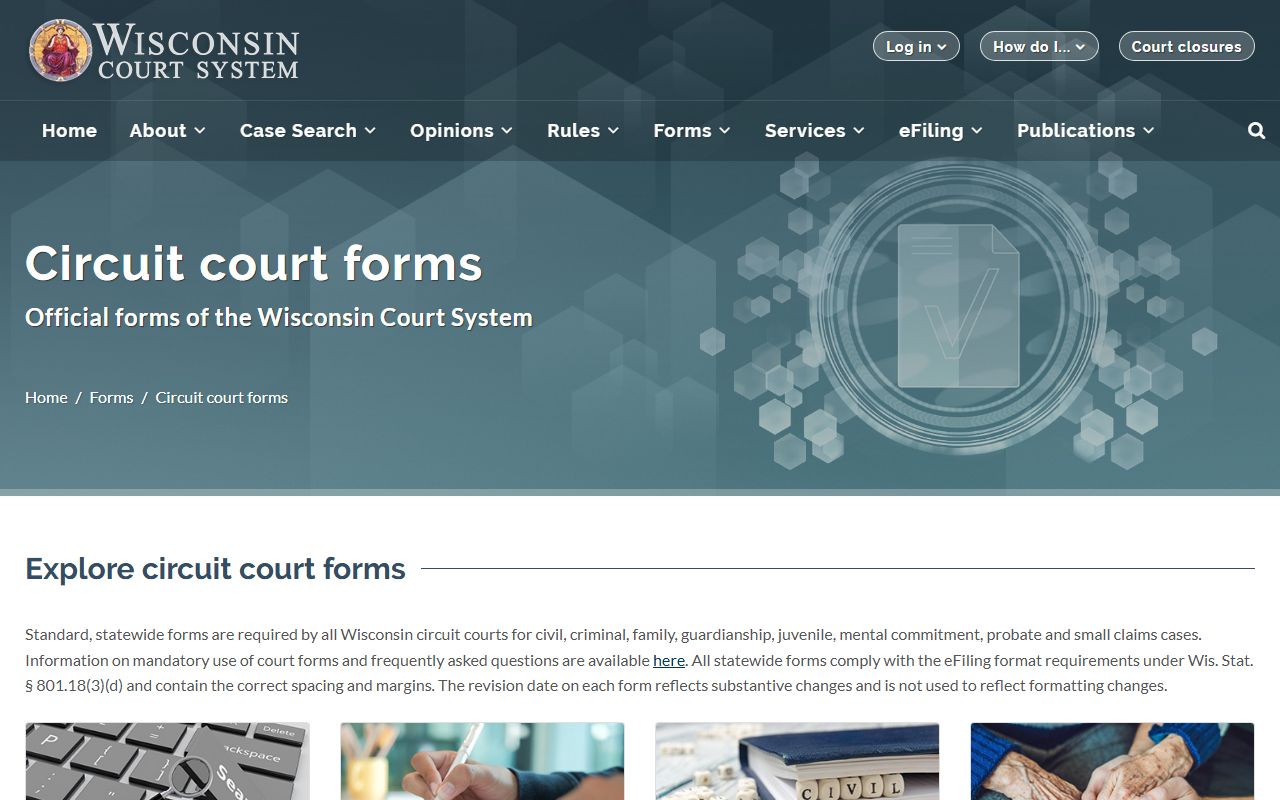
That image is a reminder that the Iowa County Divorce Decree starts with the forms, even if the final order ends up being the only page you need. The forms page does not replace the county clerk, but it does help explain the path to the decree.
Iowa County Copy Fees
Copy and search fees for an Iowa County Divorce Decree come from Wis. Stat. ch. 814. That chapter sets the certified copy fee, the page-by-page charge for uncertified copies, and the search fee that can apply when you ask the clerk to locate a file without a case number. If you know what you need before you ask, you can avoid an extra step and sometimes an extra charge.
If the copy will be used for a formal purpose, ask for a certified Iowa County Divorce Decree from the start. A plain copy can be fine for reading or review, but many agencies want the certified version. The clerk can also tell you whether a search fee will apply if you are working from names and a rough date instead of a complete case number. That is why specific request details matter.
The easiest way to keep the request clean is to give the full names used in the case, the county, and the approximate filing year. If you have the case number, include it. That makes it much easier for the clerk to pull the right Iowa County Divorce Decree and price the request correctly. The cleaner the request, the faster the result.
Iowa County Legal Research Help
The Wisconsin State Law Library can help when an Iowa County Divorce Decree search gets confusing. The library points people toward court-record guidance, county rules, family-law resources, and statute research. It does not give legal advice, but it can help you make sense of the docket, find the right chapter, or decide which office should handle the next step. That is useful if the case file is older or the search turns up more than one similar result.
For Iowa County, the best approach is usually to keep the process narrow. Search WCCA first, use the forms page to understand the papers, read chapter 767 for the family-law structure, and use chapter 814 when the copy request turns into a fee question. That keeps the Iowa County Divorce Decree search practical and focused on the county file where the order really lives.
The law library is a good backup, especially if the docket entry does not make immediate sense. It can point you toward the right public resources without replacing the county clerk. That keeps the search grounded and helps you move from a case summary to the actual decree with less guesswork.