
Search Green County Divorce Decree
Green County Divorce Decree research usually starts with the public case summary and ends with the clerk office when you need a certified copy. That split matters because the online docket is useful for names, dates, and status, but the signed decree is still part of the county court file. If you know the case number, your search is faster. If you only know the spouses, Green County records can still be narrowed with the right filters and a careful read of the docket.
Green County Divorce Decree Search
Wisconsin Circuit Court Access is the first stop for most Green County Divorce Decree searches. You can look up a party name, a business name, or a case number, then narrow the results by county, case type, filing date range, and case status. That gives you a quick county-level view of the file before you ask the clerk for anything. The result screen shows the case number, filing date, parties, judge, and a running docket of hearings and filings.
That online view is helpful, but it is not the whole file. WCCA does not provide full-text document downloads, and it leaves out sealed matters, expunged cases, juvenile cases, and pre-judgment paternity cases. Older Green County Divorce Decree files can also be thin online, especially those filed before about 2000. The site updates hourly, so a fresh filing may still be in motion when you check it. For that reason, WCCA is best used as a locator.
Once you have the docket line, keep the names, filing year, and status in front of you. Those details help the clerk find the right Green County file quickly. They also make it easier to tell a divorce decree apart from another family case that shares a similar spouse name.
The result is simple. Use WCCA to map the record, then use the county file for the certified decree. That is the cleanest path when you need a Green County Divorce Decree for a lender, a title company, or another court.
The portal is not a replacement for the decree itself, but it does save time. A good search gives you the case number, and the case number gives the clerk a direct way to pull the file. That is often the difference between a quick request and a long hunt.
The public portal is also useful when you want to confirm that a Green County Divorce Decree case is active, closed, or waiting on an update. The docket may be all you need for a status check, while the certified decree remains the record you request from the clerk.
The WCCA portal in this image is the same statewide search tool many Green County users start with before they contact the clerk. Wisconsin Circuit Court Access shows the docket view, not the signed decree, so it works best as the map to the county file.
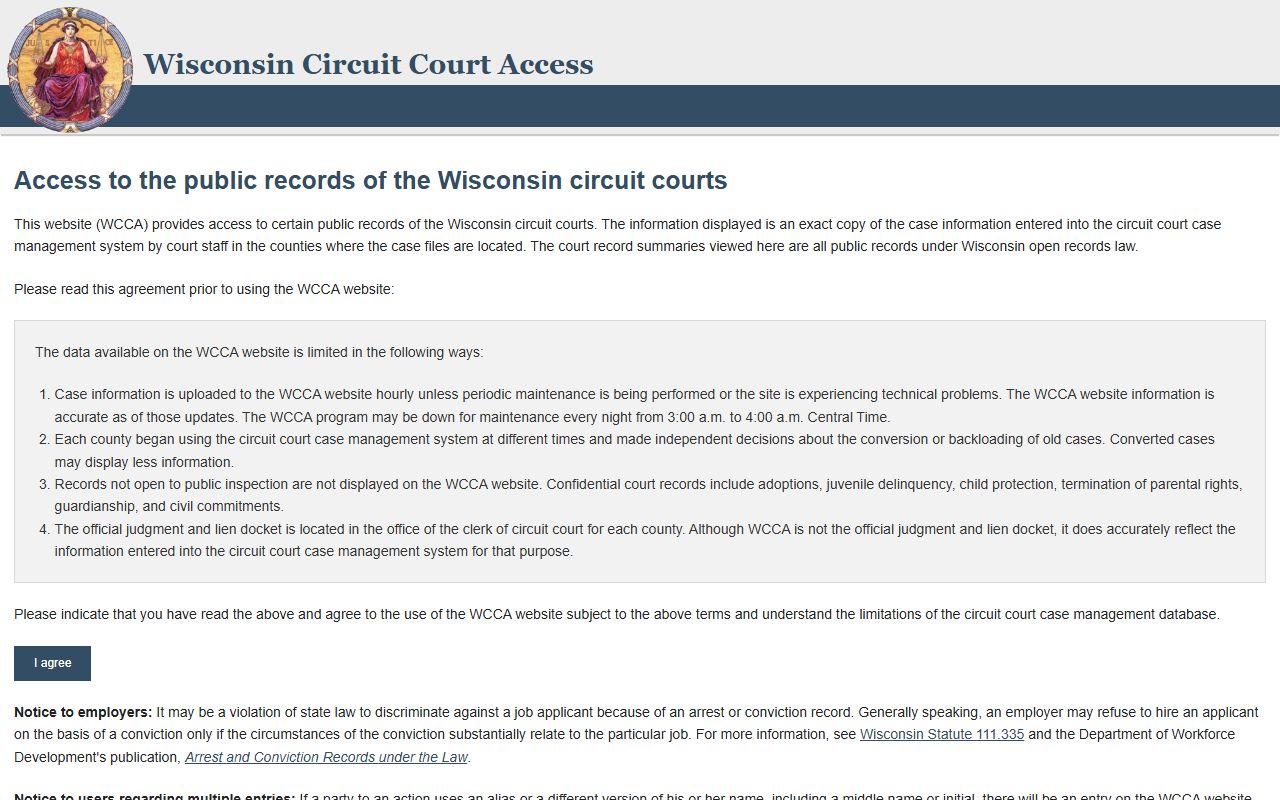
That matters because the Green County Divorce Decree itself still comes from the county court record. The image is a reminder that the public search is only one step in the copy request process.
Green County Court Records
Green County court records and the Green County Divorce Decree file are related, but they are not the same thing. The circuit court holds the signed decree, the docket shows the case history, and the clerk is the office that can provide the certified copy. That distinction is important when you are trying to prove a final judgment, not just confirm that a case existed. The county court file is the record that matters when a bank, a title company, or another agency asks for proof.
Wisconsin divorce practice also runs through the family-law rules in Wis. Stat. ch. 767. That chapter covers the divorce action, the grounds for divorce, property division, custody, and support. If you are reading a Green County Divorce Decree and trying to understand why the order looks the way it does, chapter 767 is the framework behind it. It explains why the decree deals with more than the end of the marriage.
For Green County users, it helps to keep the court file and the public summary separate in your head. The summary is a guide. The decree is the order. When you need the order, ask for the order, not just the docket page. That saves time and avoids a second request.
Green County Divorce Decree Records
The Wisconsin Vital Records Office keeps divorce certificates from October 1907 to the present, but it does not keep the Green County Divorce Decree itself. Decrees stay with the Clerk of Circuit Court in the county where the divorce was granted. That is why a certificate search and a decree search lead to different offices. If you only need to confirm the divorce event, the certificate may be enough. If you need the signed court order, the county clerk is the right stop.
The state certificate system can still help you sort the path. Since January 1, 2016, any Wisconsin Register of Deeds office can issue a divorce certificate for a divorce that occurred on or after that date. For older records, the state office or the county office where the divorce happened may still hold the certificate. That is useful background, but it does not change where the decree lives. The decree remains a Green County court record.
The difference matters when the record will be used for a legal purpose. A certificate shows that a divorce was recorded. The decree shows what the court ordered. If the issue involves property division, custody, or another follow-up question, the decree is usually the record people want. The Wisconsin Vital Records Office can help with certificates, but the Green County clerk handles the decree copy.
Green County Divorce Decree Forms
The statewide forms index at Wisconsin Circuit Court Forms is where Green County Divorce Decree work often begins. The family-law forms include the Petition for Divorce, the Summons and Petition, the Financial Disclosure Statement, the Marital Settlement Agreement, and the Judgment of Divorce. Those forms are the building blocks of the file that later turns into the decree. They also help you understand which papers should already be in the record before the final order is signed.
This is also where the chapter 767 rules become practical. The forms support the filing, service, and hearing steps that lead to a Green County Divorce Decree. If you are representing yourself, the instructions on the forms site are especially useful because they explain how to file jointly, how to serve the other party, and how to ask for the final hearing. That can keep the record clean before it reaches the clerk.
Green County researchers often move between the forms page and the case search page. That is a good habit. WCCA shows the case track, while the forms page shows the papers that shape the track. Together they make the Green County Divorce Decree easier to follow from start to finish.
Green County Copy Fees
Copy costs for a Green County Divorce Decree are controlled by Wis. Stat. ch. 814. That chapter sets the fee for a certified court copy at $5.00 and the fee for an uncertified copy at $1.25 per page. It also allows a $5.00 search fee when you ask the clerk to look for a record and you do not provide the case number. Those rules matter because a clear request can keep the cost down and cut the wait.
If you need a certified Green County Divorce Decree, say that up front. A plain copy is not the same as a certified copy, and many agencies want the certified version. If you are using the record for a bank file, a title transfer, or another court matter, the certified copy is usually the safer choice. If you only need to read the terms, a plain copy may be enough. The clerk can price the request more accurately when you know which one you want.
Good requests are specific. Include the names used in the case, the approximate filing year, and the county. If you know the case number, add it. That makes it easier for the clerk to find the right Green County Divorce Decree and avoids confusion with another family file. The better the request, the cleaner the result.
Green County Legal Research Help
The Wisconsin State Law Library is a useful support point when a Green County Divorce Decree search gets stuck. The library helps people find court records guidance, county court rules, statutes, and self-help material. It does not give legal advice, but it can help you understand a docket entry, find the right chapter, or sort out which office should handle the next step. That makes it a practical backup when the county file is not obvious.
For Green County users, the best mix is usually simple. Use WCCA to find the case, use the forms page to understand the paperwork, use chapter 767 to see the family-law structure, and use chapter 814 to price the copy request. When you bring those pieces together, the Green County Divorce Decree search becomes much more manageable. You are not guessing at the record, and you are not asking the wrong office.
The law library is especially helpful if the Green County Divorce Decree is older or the docket summary is hard to read. It can point you toward the right resources without pretending to replace the clerk. That keeps the search focused and keeps the request grounded in the county file where the decree actually lives.