
Search Eau Claire County Divorce Decree
When you need an Eau Claire County Divorce Decree, start with the public case search and then move to the circuit court file for the certified record. WCCA can show whether a case is open or closed, who the parties are, and which county handled the filing. That first pass saves time when you only have a spouse name or a rough year. In Eau Claire County, the search is simple once you know the record type, and the county court file remains the source for the decree itself.
Eau Claire County Divorce Decree Records
Wisconsin Circuit Court Access is the public door into Eau Claire County divorce records. It displays an exact copy of the case information entered by court staff, so the result is useful even when you are still sorting out the spelling of a name or the filing year. Search by party name, business name, or case number, then narrow the results with county, case type, filing date, or case status if you need a cleaner match.
That public view is helpful, but it is still not the full file. WCCA gives docket information and case status, not the complete decree document. The system also has limits. Sealed cases, expunged matters, juvenile cases, and pre-judgment paternity files are not part of the public portal. Older cases, especially those filed before about 2000, may show less detail or no electronic record at all.
The county record still matters because the decree itself is a court document. If the online search gives you a case number, you have a solid starting point for a courthouse request. If it does not, the online docket can still help you confirm that the case belongs in Eau Claire County before you ask for copies. That keeps the request focused and keeps you from chasing the wrong file in the wrong county.
Public access under Wisconsin law keeps this information available, but it does not change the difference between a case summary and the decree. For a quick reference check, WCCA is the tool. For the final order, the Eau Claire County Clerk of Circuit Court is the source.
Eau Claire County Court File Office
The Eau Claire County Clerk of Circuit Court keeps the divorce case file and can issue certified copies of the decree. That office is the right destination when a bank, agency, or another court wants proof of the final judgment. A docket entry can tell you the case exists, but the clerk keeps the paper record that matters when the request needs a stamp or a certified seal.
The Wisconsin Vital Records Office page at state vital records guidance shows why the county court file still matters most for a Divorce Decree. The state office keeps divorce certificates from October 1907 to the present, but it does not keep divorce decrees. Those stay with the county clerk where the divorce was granted. If you are comparing a certificate and a decree, that difference is the first thing to sort out.
The state page also explains that Wisconsin Register of Deeds offices can issue divorce certificates for eligible post-2016 records, while older records may still sit with the county where the divorce happened. That can help when you need a family record, but it does not replace the court order itself. If your goal is the decree, the clerk of circuit court remains the office to contact in Eau Claire County.
Fee rules also live in the courthouse side of the process. Wis. Stat. ch. 814 sets the copy and search framework for court records, including the $5 certified copy fee, the $1.25 per page copy charge, and the $5 search fee when a case number is not provided. A clean file number usually makes the request faster, but the statute gives the clerk the rules to follow when you have to search from a name alone.
The page below shows the state vital records office, which is useful because many people arrive thinking a divorce certificate and a Divorce Decree are the same thing. They are not. The photo is a reminder that the state handles certificates, while the county court file keeps the decree.
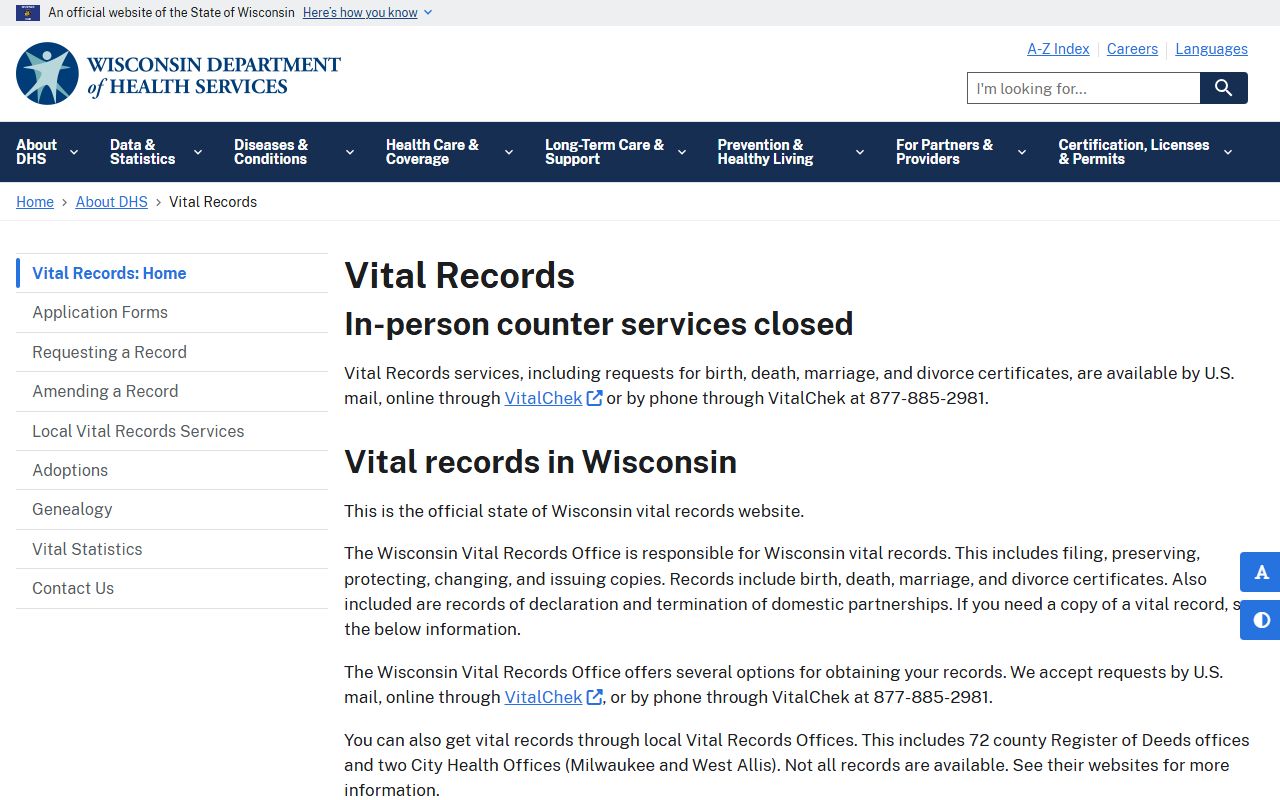
That distinction saves time. Once you know which record you need, the Eau Claire County request becomes a simple office question rather than a guess.
Eau Claire County Divorce Decree Search
Use WCCA first when you want a fast Eau Claire County Divorce Decree search. The portal lets you search by name or case number and then use county and case filters to narrow the field. That helps when the name is common or when you only know part of the filing history. It also helps when you want to make sure the case was actually filed in Eau Claire County before you ask for copies.
The search is practical, but it is not a document vault. WCCA shows docket data and case summaries, not the whole decree. That means the online step is best used as a map. Once you have the case number or the filing details, the county clerk can use the file to provide the certified record. If the case is recent, the public data usually appears in hourly updates when the system is running normally.
Older records deserve extra care. Cases filed before about 2000 can be thin online, and some may be missing from the digital view even though the county file still exists. That is normal for Wisconsin court access. A search result is still useful if it confirms the county, because that gives you the right office and the right request language.
If you are working from limited details, gather the pieces that matter most before you search. A short list usually works better than a long story.
- Full names used in the divorce case
- Approximate filing year or date range
- Case number, if you already have it
- County and case type filters
Those details usually make the difference between a quick match and a long hunt. Once WCCA gives you the filing trail, the clerk can move from search to certified copy with less guesswork.
Eau Claire County Forms and Fees
The Wisconsin Court System keeps the statewide family forms on the circuit court forms page. For divorce work, that page includes the Petition for Divorce, Summons and Petition, Financial Disclosure Statement, Marital Settlement Agreement, and Judgment of Divorce. Those forms are the right place to start if you are filing a case, answering one, or checking which document belongs in the record set.
That forms page sits beside Wis. Stat. ch. 767, which governs divorce and other family actions in Wisconsin. The statute sets the legal frame for the case, while the forms page gives you the state-approved paperwork that fits that frame. When a family case moves forward, those forms become part of the court record that later leads to the Divorce Decree.
The forms site is also helpful when the paper trail is messy. It shows how the divorce packet is organized, and it lets you confirm whether a filing should be a petition, a financial statement, or the final judgment form. That can be important in Eau Claire County because people often remember the outcome of the case but not the name of the form that carried it there.
Once you understand the forms, the record path gets clearer. If your need is a copy of the final decree, the form list helps you tell the decree from the earlier filings. If your need is to start a new family case, the forms page gives you the state-backed documents that match Wisconsin practice.
Eau Claire County Divorce Decree Help
The Wisconsin State Law Library is a good next stop when an Eau Claire County Divorce Decree search needs context. The library explains how to use the Wisconsin Circuit Court Records website, how to read docket entries, and where to find related court rules. It does not give legal advice, but it can help you understand the record before you ask the clerk for a copy.
The law library is also useful when you want to match a record to a statute. Chapter 767 explains the family action side of a divorce case, while chapter 814 explains the cost side of copies and searches. Those are different jobs, and it helps to keep them separate. One statute tells you how the case is built. The other tells you how the county charges for the file work.
That split matters in day-to-day use. A case summary tells you what happened. A form tells you how the filing was structured. A certified decree tells you what the court ordered. When you keep those three things apart, the Eau Claire County request becomes easier to explain and easier to fill.
Note: Bring the spouse names and a case number if you have one, because those details keep an Eau Claire County clerk search short and specific.