
Find Dunn County Divorce Decree
If you need a Dunn County Divorce Decree, begin with the public case summary and then move to the county file for the certified copy. Dunn County users can check the online docket first, confirm the case number if it is available, and sort out whether the record is active or closed. That search step is useful when you only know one spouse name or a rough filing year. It also helps when you are deciding between a decree and a certificate. Once the case is matched, the county office can focus on the right record without guessing.
Dunn County Divorce Decree Office
Dunn County Divorce Decree requests belong with the Clerk of Circuit Court because the decree is the signed court order, not the divorce certificate. The public docket may show you the case path, but the county court file is the source of the final judgment. That matters when you need proof for a lender, a title company, another court, or a legal name change. A docket summary can help you find the file, but it cannot replace the decree.
When you contact the clerk, give the spouse names as they appeared in the filing, the filing year if you know it, and the case number if WCCA gives you one. Those details make the Dunn County request much easier to handle. If the record is older, the filing year may matter more than anything else. If the record is recent, the case number can speed the pull.
The same split applies across Wisconsin. A divorce certificate is a vital record, while the decree is the court record. That difference is small on paper but important in practice. If you need the court order itself, the Dunn County Divorce Decree is the record to ask for by name.
Dunn County Search Process
Wisconsin Circuit Court Access is the best starting point for a Dunn County search because it shows the public case summary, the filing date, the case status, and the docket trail. You can search by party name, business name, or case number, then use county, case type, date range, and status filters to narrow the results. That makes it easier to find a divorce case in a list that may also include other civil matters.
WCCA is helpful, but it is not the whole record. Full-text documents are not available for download, and older files may be thin online. Sealed matters, juvenile matters, expunged records, and pre-judgment paternity cases are excluded from the public view. The site also reflects public records law under Wis. Stat. 19.31-19.39, so it is an access tool rather than a full archive. For Dunn County, that means the online summary is the road map, not the destination.
Because the database is tied to the court data entry stream, a recent filing may not appear immediately. If the result is close but not exact, try the name as it was used when the case was filed. A prior surname, a spelling change, or a middle initial can make a real difference. Dunn County searches often get better once the date range and the names line up.
Dunn County Divorce Decree Forms
The state forms library at Wisconsin Circuit Court Forms is where Dunn County users can check the paperwork tied to a divorce case. The forms page covers family law and other circuit court matters, and it is the right place to confirm the current versions of the forms used in divorce practice. FA-4101, FA-4102, FA-4139, FA-4150, and FA-4140 are the standard pieces many people see in the file.
The state forms page below comes from Wisconsin Circuit Court Forms, and it is a good visual check when you are matching a Dunn County Divorce Decree search to the paperwork in the file.
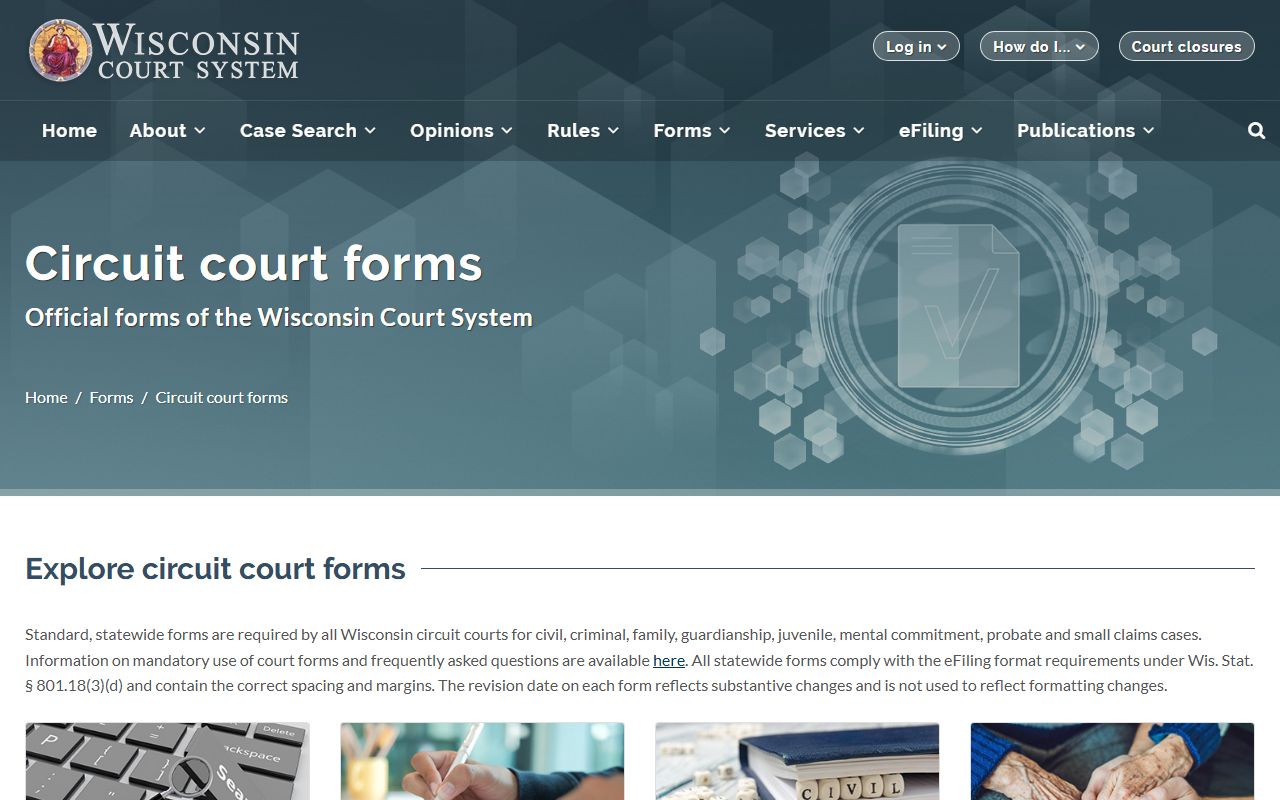
That image is useful because it points you toward the filing side of the case. Forms do not replace the decree, but they do help explain how the case was built. If a docket note mentions a disclosure statement or a final judgment, the forms page lets you match the label to the document. That makes the later clerk request clearer and less likely to be mislabeled.
The forms also sit inside Wis. Stat. ch. 767, which governs actions affecting the family. That chapter sets the legal frame, while the forms page gives the working packet. In Dunn County, the two work together. The forms guide the filing, and the decree closes the case.
Dunn County Copy Help
The Wisconsin Vital Records Office keeps divorce certificates from October 1907 to the present, but it does not keep divorce decrees. That split matters in Dunn County because a certificate can confirm the divorce, while the decree shows the court's final order. After January 1, 2016, eligible divorce certificates can be issued statewide, and the first certified copy costs $20 with $3 for each additional copy ordered at the same time.
When you ask the Dunn County Clerk of Circuit Court for the decree itself, Wis. Stat. ch. 814 controls the copy and search fee side. A certified copy, a plain copy, and a search are not the same request. If you do not know the case number, the clerk may need the full spouse names and a filing year. That extra detail helps the office pull the right file and avoids wasted effort.
The certificate path and the decree path are related, but they do different jobs. If you only need proof that a divorce happened, the vital records office may be enough. If you need the actual judgment language, the Dunn County Divorce Decree must come from the county file. Note: A county court copy answers a different question than a divorce certificate, so ask for the record you need first.
The Wisconsin State Law Library can help when the docket or statute trail is not clear. Its guides explain how to use WCCA, how to read case summaries, and where to look for court rules or research help. That support is useful when a Dunn County search feels thin or when you need to understand a docket entry before you ask for a certified copy. The library does not give legal advice, but it can make the records path easier to follow.
That kind of research help is often enough to turn a broad Dunn County record request into a precise request for the final decree.
For many Dunn County users, that means fewer repeat calls and a better chance of getting the right court copy on the first request. It also means less confusion between a certificate request and a decree request when both records are discussed at the same time. That small distinction saves real time.