
Clark County Divorce Decree Records
A Clark County Divorce Decree search usually starts with the public docket and ends with the clerk-held file. WCCA gives the case summary. The county court file gives you the signed order. If you only know the spouse names or an old filing year, Clark County still gives you a clean path. Check the docket first, match the case, and then ask for the certified copy from the office that keeps the court record. That keeps the request focused and avoids wasted motion.
Clark County Divorce Decree Search
Wisconsin Circuit Court Access is the fastest public tool for a Clark County Divorce Decree search. You can search by party name, business name, or case number, then narrow the results with county, case type, filing date range, and case status filters. The portal shows case numbers, filing dates, party names, judge assignment, and a running docket of hearings and filings. That is enough to confirm whether a divorce case exists before you contact the clerk.
WCCA does not offer full-text document downloads. It is a public case summary, not the actual file. Sealed matters, expunged matters, juvenile cases, and pre-judgment paternity cases are not available through the portal. Older Clark County records may also be thin online, especially if the filing predates the broader electronic coverage that started around 2000. The online view can still point you to the right file, even when the final document is not shown.
The portal updates on a regular schedule, so a fresh filing may not appear the same minute it is entered. That is normal. If a Clark County Divorce Decree search looks close but not exact, try the name as it appeared when the case was filed. Old married names, middle initials, and spelling shifts can matter. The public site is meant to help you find the case. The county file is what gives you the decree.
Note: WCCA is the first stop for Clark County, but the certified Divorce Decree still comes from the Clerk of Circuit Court.
Clark County Divorce Decree Office
Clark County Divorce Decree requests belong with the Clerk of Circuit Court because the decree is a court order and not a vital record. The county file holds the signed judgment. A divorce certificate can help with basic proof, but it does not carry the same detail as the decree. If you need property division language, custody terms, or another court finding, the court file is the record that matters in Clark County.
The image below comes from Wisconsin Circuit Court Forms, which is the statewide source many people use when they are matching a Clark County Divorce Decree search to the paperwork in the file.
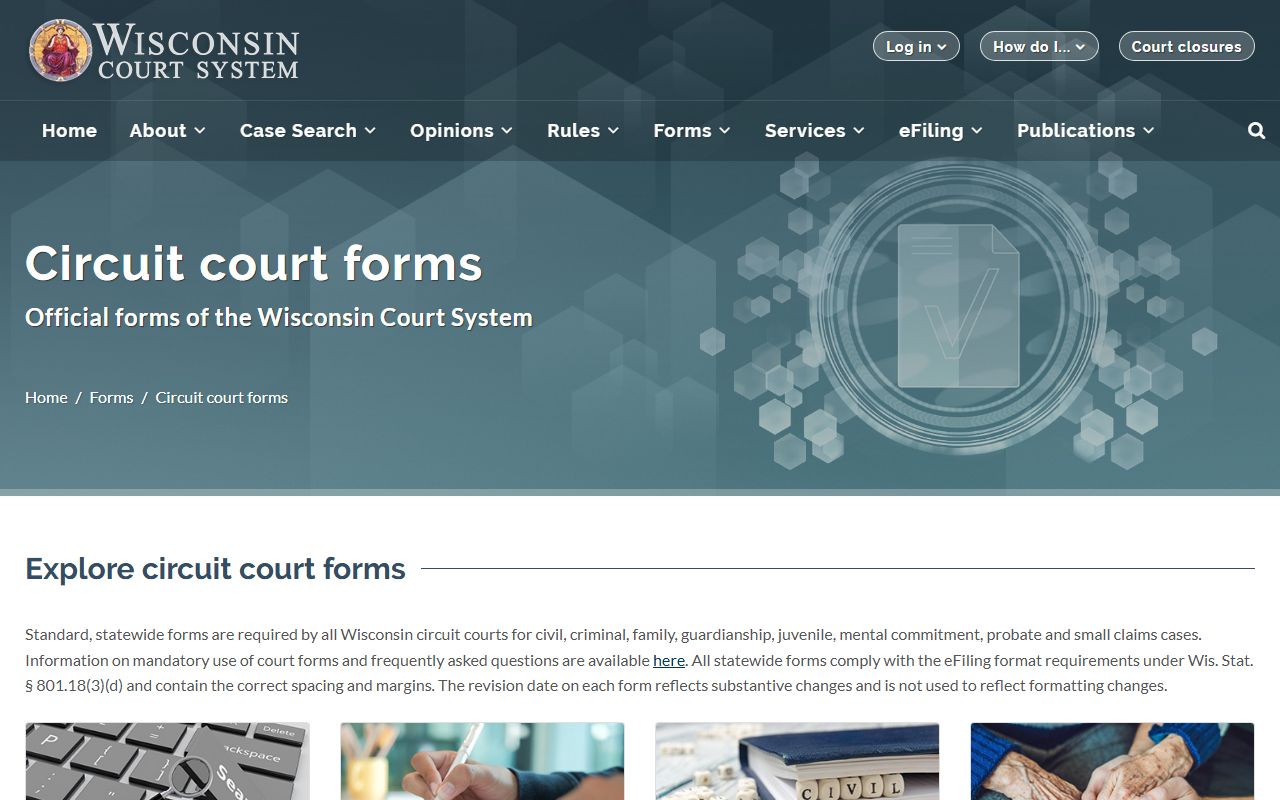
That image fits the office side of the search because it points you toward the paperwork that surrounded the case. The forms do not replace the decree, but they help you understand what should appear in the file. If you are checking a recent matter, the case number from WCCA can make the clerk request quicker. If the file is older, the filing year and spouse names matter more.
Clark County users should also keep the record split in mind. A divorce certificate comes from vital records. The decree comes from the county court file. That difference sounds small. It is not. It decides where you send the request, how the office looks for the file, and whether the copy you get is the one a bank or another court will accept.
Clark County Court Forms
Wisconsin family actions follow Wis. Stat. ch. 767, and the statewide forms library at Wisconsin Circuit Court Forms is the place to find the papers that support a Clark County Divorce Decree case. The library includes the Petition for Divorce, Summons and Petition, Financial Disclosure Statement, Marital Settlement Agreement, and Judgment of Divorce. Those forms help move the case, but they are not the certified decree copy that lives in the county file after the judge signs it.
The forms page is useful because it keeps the filing language in one place. You can browse by case type or search by form number or keyword. That helps when a docket entry refers to a form name and you want to know what it means. If you are working with FA-4101, FA-4102, FA-4139, FA-4150, or FA-4140, the state page shows the current version and any instructions tied to it. Clark County users can use that to confirm the paper trail before making a copy request.
The forms page also links to self-help material. That is important for people who are handling the divorce on their own. The instructions explain how the filing, service, and hearing steps fit together. They also help with joint petitions and final hearing preparation. None of that changes the fact that the decree sits in the clerk file, but it does make the docket easier to read and the request easier to frame.
Clark County Court Copy Help
The Wisconsin Vital Records Office keeps divorce certificates from October 1907 to the present, but it does not keep divorce decrees. For Clark County users, that distinction is the starting point. The certificate side can show that a divorce happened. The decree shows the court result. If you need the signed order, the county clerk is the right office.
The state page also explains that Wisconsin began statewide issuance on January 1, 2016 for eligible divorce certificates. Any Register of Deeds office in the state can issue a certificate for a divorce that happened on or after that date. For earlier divorces, the Vital Records Office in Madison or the county Register of Deeds where the divorce occurred may still hold the record. Certified certificates cost $20.00 for the first copy and $3.00 for each extra copy ordered at the same time. That is separate from the county court copy charge.
When you need the actual decree, Wis. Stat. ch. 814 controls the copy and search fee side. The clerk may charge for certified copies, plain copies, and record searches. A case number from WCCA can reduce the work. If you do not have the number, send the spouse names and a rough filing year so the clerk has a clean place to start. Clark County requests move faster when the document type is clear and the names match the case file.
The Wisconsin State Law Library is a helpful backup when the record path is not obvious. The library explains how to use WCCA, points readers to local court rules, and helps users find statutes, case law, and self-help material. It does not give legal advice, but it can make a Clark County Divorce Decree search easier to understand. That is useful when the docket is short or the case history is old enough to need a second source.
Clark County users usually get the best result when they separate the certificate request from the decree request. The certificate may satisfy one need. The decree satisfies another. Keep those purposes apart, and the office can send you the right record the first time.