
Chippewa County Divorce Decree Search
Searching a Chippewa County Divorce Decree usually starts with the public docket and ends with the county court file. WCCA shows the case trail. The Clerk of Circuit Court holds the signed decree. If you only know part of the case, Chippewa County still gives you a clear path. Start with the names used in the filing, match the record, and then move to the office that can issue the certified copy. That keeps the search tight and saves time.
Chippewa County Divorce Decree Office
Chippewa County Divorce Decree requests belong with the Clerk of Circuit Court because the decree is a court order, not a certificate. The county file is the source that proves what the judge signed. If you need the record for a bank, a title company, a benefits office, or another court, the certified copy from the Chippewa County file is the document that matters. A plain docket line can help you find the case, but it does not replace the decree.
The public access image below comes from Wisconsin Circuit Court Access, which is the first place many Chippewa County users check before they call the clerk.
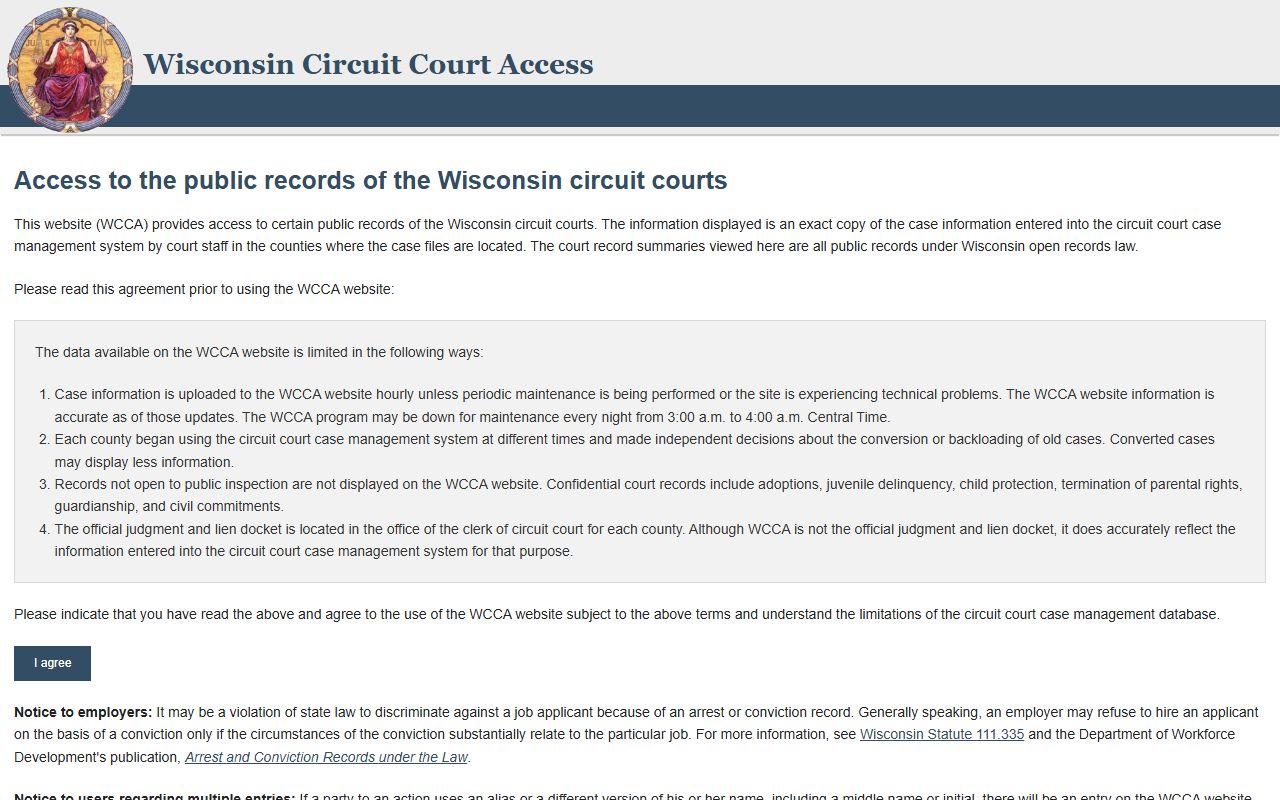
That visual matches the way most searches work. The docket gives you the county, the case type, the filing date, and the status. The clerk gives you the decree. When those two pieces line up, the request gets easier. If the case is recent, the file number can speed things up. If the case is older, the filing year and the spouse names become more important.
Chippewa County users also need to keep the office split in mind. A divorce certificate can show that a divorce happened. The decree shows the legal result of the case. Those are not the same record. If you ask for the decree by name, the clerk can route the request faster and avoid the common mix-up that sends people to the wrong record set.
Chippewa County Divorce Decree Search
WCCA is the main public search tool for a Chippewa County Divorce Decree search. You can search by party name, business name, or case number, then narrow the results with county, case type, filing date range, and case status filters. The portal shows docket details, case numbers, judge assignment, and a chronological record of hearings and filings. It is a strong first check when you want to see whether a divorce file exists and where it sits in the court timeline.
WCCA does not provide full-text document downloads. That matters. The site is a case summary tool, not a file cabinet. It also leaves out sealed cases, expunged cases, juvenile cases, and pre-judgment paternity matters. Older Chippewa County records may have limited online detail, especially if the filing predates the broader electronic coverage that began around 2000. The record may still exist in the county file even when the online view looks thin.
WCCA data is posted from the court case management system and updated on a regular cycle, so new filings can take a little time to appear. That is normal. If the search result is close but not complete, try the names that were used when the case was filed. A maiden name, a prior married name, or a middle initial can change the result. Small spelling shifts matter too, and Chippewa County searches often improve once the name is matched exactly.
Note: WCCA is the best first stop, but the certified Chippewa County Divorce Decree still comes from the Clerk of Circuit Court.
Chippewa County Court Forms
The statewide forms page at Wisconsin Circuit Court Forms is the right place to look when you need the paperwork that supports a Chippewa County Divorce Decree request. Wisconsin family actions follow Wis. Stat. ch. 767, and the forms library matches that framework. It includes the Petition for Divorce, Summons and Petition, Financial Disclosure Statement, Marital Settlement Agreement, and Judgment of Divorce. Those forms are the paper trail for the case, but they are not the certified decree copy.
The forms site helps people who are still filing, answering, or closing out a case. You can browse by case type or search by form number or keyword. That is handy when a docket entry mentions a form but not the full title. If you see FA-4101, FA-4102, FA-4139, FA-4150, or FA-4140, the forms page gives the clean label and the current version. Chippewa County users can use that to make sure they are reading the record correctly before they ask for copies.
The forms page also connects to self-help material. That matters for people who are handling the divorce without a lawyer. The instructions explain filing steps, service issues, and what needs to happen before a final hearing. Those details do not replace the decree, but they do help you understand how the decree got there. When the file is confusing, the forms page can turn a short docket note into a usable search clue.
Chippewa County Court Copy Help
The Wisconsin Vital Records Office keeps divorce certificates from October 1907 to the present, but it does not keep divorce decrees. That split matters in Chippewa County. A certificate can confirm that a divorce happened. The decree is the court order that shows the outcome. If you need proof of property terms, custody terms, or another court finding, the decree is the record you want from the county file.
The same state page also notes that statewide issuance began on January 1, 2016 for eligible divorce certificates. Any Register of Deeds office in Wisconsin can issue a divorce certificate for a divorce that happened on or after that date. For earlier divorces, the Vital Records Office in Madison or the county Register of Deeds where the divorce occurred may still hold the record. Certified certificates cost $20.00 for the first copy and $3.00 for each additional copy ordered at the same time. That fee is separate from the county court copy path.
When you need the decree itself, Wis. Stat. ch. 814 controls the court fee side. That chapter covers the copy charge and the search charge that may apply if you do not already have the case number. A plain copy and a certified copy are different requests. In Chippewa County, the safest approach is to name the document you need, give the full spouse names, and add the filing year if you have it. A case number from WCCA makes the request even cleaner.
The Wisconsin State Law Library is the best backup source when the record trail is unclear. Its WCCA guide explains how the public site works, and its research pages point to local court rules, statutes, and self-help material. The library does not give legal advice. It does help you make sense of docket language, filing terms, and county rules before you contact the clerk. That support can save time when a Chippewa County Divorce Decree search turns into a broader record question.
Chippewa County requests go best when the record type is clear from the start. Ask for the decree when you need the court order. Ask for the certificate when you need the vital record. Keep those paths separate, and the office can send you to the right place faster.