
Buffalo County Divorce Decree Search
Buffalo County divorce decree research usually starts with a WCCA case check, then moves to the county clerk for a certified copy. The public portal shows docket history and case status, but it does not replace the signed decree kept in the circuit court file. If you are sorting out a divorce decree, a divorce certificate, or the right filing year, Buffalo County is easier to handle when you follow the record in order. Start with the case, confirm the file, and then ask for the exact court document you need.
Buffalo County Divorce Decree Office
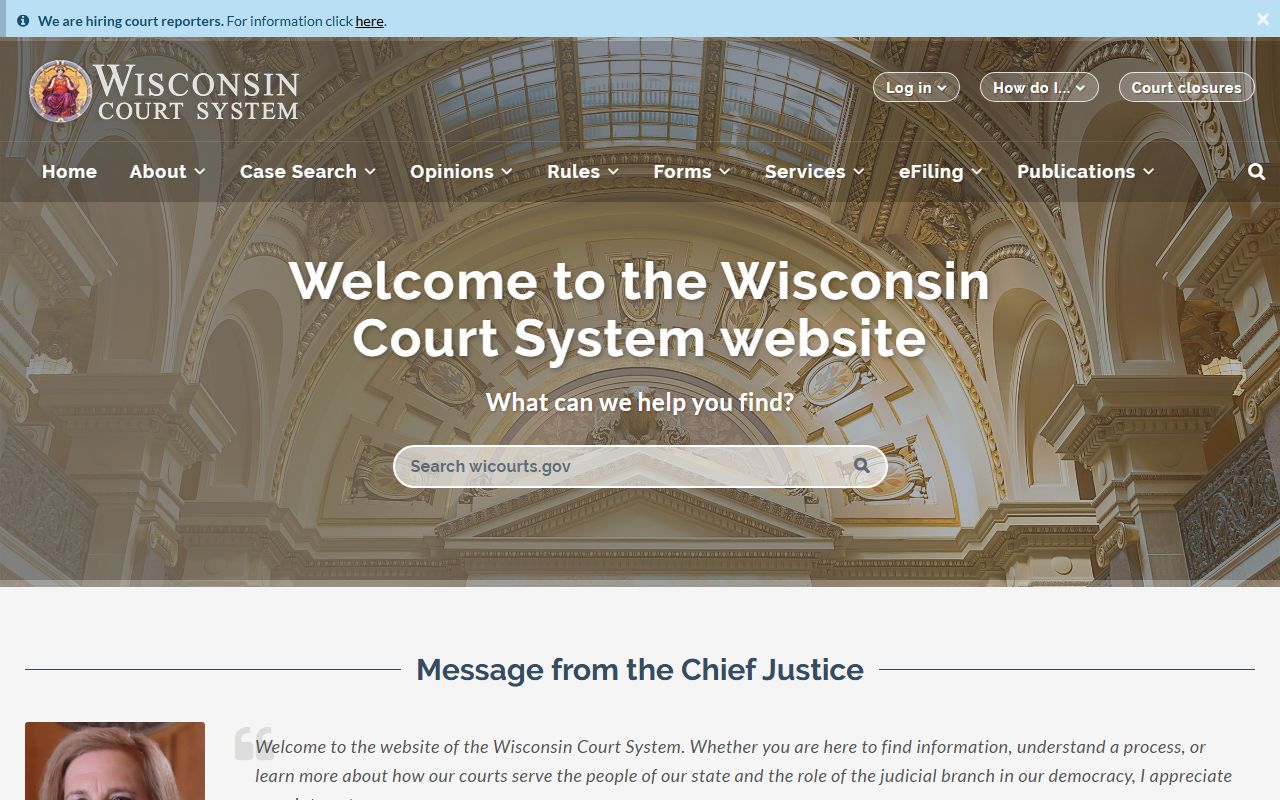
The Wisconsin Court System homepage at https://www.wicourts.gov/ is a useful starting point for Buffalo County divorce decree research because it leads you into the state court tools before you narrow anything to the county level. The page below comes from that site and gives you a visual anchor before you dig into the docket.
That split matters. A divorce decree is a court record, while a divorce certificate is a vital record. Buffalo County follows the same statewide rule: the decree stays with the Clerk of Circuit Court in the county where the divorce was granted, and the certificate side runs through vital records. If you need the order that divides property or sets custody terms, ask for the decree, not just a certificate. That one detail saves time.
Buffalo County searches work best when the request is tied to the case file, not a broad records search. If the file is active or recent, the clerk can usually work from a case number, a party name, or a rough filing date. If the case is older, it helps to know the year because online coverage can thin out as you move back in time. The state site is the first doorway. The county file is the final record.
Buffalo County Divorce Decree Search
Wisconsin Circuit Court Access is the main public search tool for Buffalo County divorce cases. It lets you search by party name, business name, or case number, then narrow the result by county, case type, filing date range, and case status. The portal gives you docket information, case numbers, judge assignment, and the filing trail. It does not provide full-text documents for download, so it is best for checking status and confirming the case file before you ask for a copy.
WCCA also has limits that matter in real searches. The database has been online since April 1999, but older Buffalo County cases may have thin electronic detail. Sealed, expunged, juvenile, and pre-judgment paternity matters are excluded. The data uploads hourly unless maintenance or a technical issue interrupts the cycle. For official use, the court record should still be verified with the clerk. Note: WCCA is the first stop, not the final proof, especially when you need a certified divorce decree.
That makes the public portal helpful, but not complete. A docket entry can show that a divorce was filed, heard, or finalized. It can also show the judge and the case status. What it cannot do is hand you the signed decree. For that, Buffalo County users need the county record office that keeps the court file. The distinction is simple, but it matters every time a lender, title company, or another court asks for the real document.
Buffalo County Divorce Decree Forms
The forms page at Wisconsin Circuit Court Forms gives you the statewide family forms used under Wis. Stat. ch. 767. Those forms include the Petition for Divorce, Summons and Petition, Financial Disclosure Statement, Marital Settlement Agreement, and Judgment of Divorce. They shape the case, but they are not the certified decree copy you may need later. A completed form set and a signed decree are related, yet they serve different jobs.
The forms site is also useful when you want to compare a live case to the papers in the file. It includes step-by-step help, PDF forms, and support for self-represented filers. Buffalo County residents who are sorting a divorce decree request can use that page to see whether the issue is a missing form, a filing step, or just a need for the final order. The Wisconsin State Law Library at https://wilawlibrary.gov/ can help with WCCA guidance, local court rules, and research support when the file history is not obvious.
The law library is also useful when a divorce decree request turns into a broader records question. Its WCCA guide explains how to read docket entries and case summaries, which helps when the online file is partial. That is practical in Buffalo County because an older case may need more than a quick search by name. The library cannot give legal advice, but it can help you find the right statute, court rule, or court record path without guesswork.
Buffalo County Divorce Decree Certificates
The Wisconsin Department of Health Services at https://www.dhs.wisconsin.gov/vitalrecords/index.htm explains the certificate side of the record. Wisconsin keeps divorce certificates from October 1907 to the present, and those certificates are not the same thing as a divorce decree. A certificate can help with proof of a divorce, but the decree remains the court order that lives in the county file. If your purpose involves property division, custody terms, or another court issue, the decree is the record that matters.
Statewide issuance began on January 1, 2016 for eligible divorce certificates, so a Register of Deeds office may be able to issue a later certificate even when the divorce happened in another Wisconsin county. For older divorces, the Vital Records Office in Madison or the county Register of Deeds where the divorce occurred may still hold the record. Applicants must submit a completed application, acceptable identification, and the right fee. Certified certificates cost $20 for the first copy and $3 for each extra copy ordered at the same time.
That means Buffalo County users should match the record to the need. If the goal is proof that a divorce happened, a certificate may be enough. If the goal is to show what the judge ordered, the decree is the better document. The key point is not subtle. A certificate tells one story. A decree tells the court story, and that story comes from the county file.
Buffalo County Divorce Decree Copies
Copy requests for a Buffalo County divorce decree follow Wis. Stat. ch. 814. That statute sets the fee structure for court records, including the $1.25 per page charge for uncertified copies, the $5 certified-copy fee, and the $5 search fee when you do not have the case number. Those numbers matter because a plain docket printout is not the same as a certified decree. If you need something a bank, title company, or another court will accept, ask for the certified copy up front.
Buffalo County requests go faster when you bring the full names used in the case and a rough filing year. The clerk may be able to find the decree more quickly if you also have the case number from WCCA. If you do not, the search fee can still be worth it, especially for older files with limited online detail. The record you want is the signed decree in the county file, not a summary page or a divorce certificate when the court order is required.
The cleanest route is simple. Check WCCA, confirm the file, use the forms page if you are still in the filing stage, and then ask the county clerk for the decree copy that fits your purpose. Buffalo County records work best when the request names the right document the first time. If you need both the decree and a certificate, handle them as separate requests so the office can route each record correctly.