
Find Kenosha Divorce Decree
Kenosha Divorce Decree records stay in the Kenosha County circuit court file. That is the point to keep in view. If you begin with a city address, a family history note, or an old case year, use Wisconsin Circuit Court Access first to locate the case. Then go to the Kenosha County Clerk of Circuit Court for the actual decree copy. A state certificate can confirm that a divorce happened, but it does not replace the signed court judgment. When you need the judgment terms, the county court file is the record that counts.
Kenosha Divorce Decree Search
Wisconsin Circuit Court Access is the normal first stop for a Kenosha Divorce Decree search. The portal lets you search by party name, business name, or case number, and the advanced filters let you narrow the result by county, case type, filing date range, and case status. For Kenosha city users, the county filter should point to Kenosha County so the search lands on the right circuit court file. The result screen shows the case number, filing date, party names, judge, case status, and the docket history.
The docket gives useful clues, but it is not the full decree. The WCCA data is a public copy of what court staff entered into the case management system. It updates hourly unless maintenance or a technical problem gets in the way, and it does not provide full-text documents for download. Older files may be limited, especially those filed before about 2000. Sealed records, expunged records, juvenile cases, and pre-judgment paternity matters are also outside normal public access. That is why the online search should be treated as a locator rather than the finished record.
For a Kenosha Divorce Decree search, the most useful habit is to keep the exact names, the year, and the filing county in front of you. That makes the clerk request cleaner and lowers the chance that you get a similar case from another county or another family file.
Kenosha Circuit Court Records
Kenosha Circuit Court records are where the final decree is kept. The Kenosha County Clerk of Circuit Court holds the county file, and that office is the one that can provide a certified copy of the Kenosha Divorce Decree. City offices can help you orient yourself, but they do not hold the final judgment. If you need the actual decree language for property, custody, support, or a later legal question, the circuit court file is the source to use.
The Wisconsin State Law Library page is a helpful fallback source when a docket term or record label is hard to read. Wisconsin State Law Library
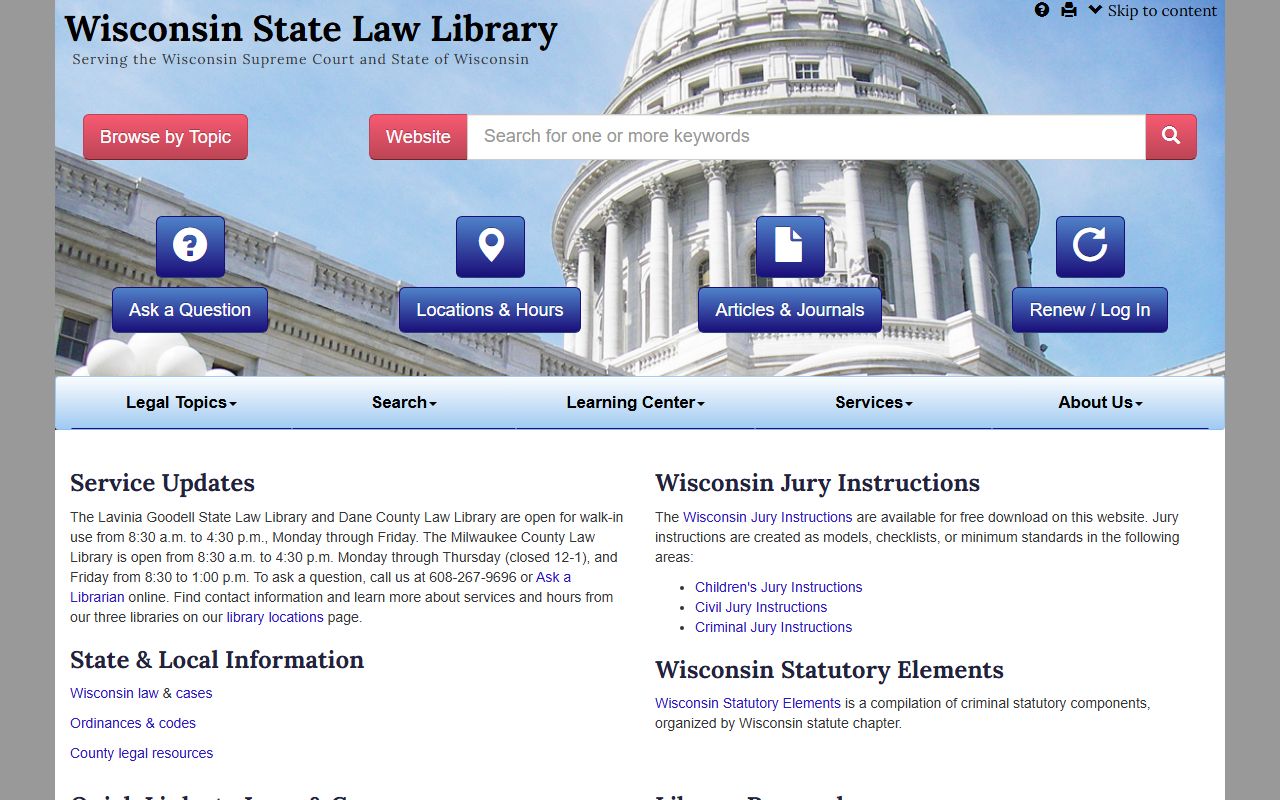
That image fits the research path for Kenosha because the law library helps users sort out court records, statute references, and local rule questions. It does not replace the county clerk, but it can keep the Kenosha Divorce Decree request focused on the right source.
The county and state records systems work together here. A divorce certificate comes from the state vital records side. The decree stays in the county court file. If you are only trying to show that a divorce occurred, the certificate may do the job. If you need the final judgment and the exact court language, the county clerk remains the right office for Kenosha users.
Kenosha Divorce Decree Forms
Wisconsin circuit court forms give Kenosha users the document names that usually show up in a divorce case file. The research lists the Petition for Divorce, Summons and Petition, Financial Disclosure Statement, Marital Settlement Agreement, and Judgment of Divorce. Those names help when you are reading a docket and trying to tell an early filing from the final decree. The forms page also helps if you need to compare the paper you have with the papers that should be in the county file.
The Wisconsin Court System home page brings the record tools together. Wisconsin Court System links to case search, forms, self-help material, and other court resources. The circuit eFiling portal is part of that system and sends filings to the county clerk after submission. Wisconsin circuit eFiling is mainly for new filings and related court papers, but it still helps Kenosha users who are moving through the same family case and need the filing sequence to make sense.
Family actions in Wisconsin are governed by Wis. Stat. ch. 767. That chapter covers the divorce framework, including property division, custody, and support. It does not replace the decree. It explains the law that shapes it. If the Kenosha Divorce Decree is hard to read, the statute can help you understand why the court order includes the issues it does.
Kenosha Divorce Decree Copies
Copy fees for a Kenosha Divorce Decree are set by Wis. Stat. ch. 814. The research says a certified court copy costs $5.00, an uncertified copy costs $1.25 per page, and a $5.00 search fee can apply when a person asks the clerk to look for a record without giving the case number. That fee structure rewards a clear request. If you know the names and the filing year, the clerk can often get to the right file faster and with less back-and-forth.
An exemplified or triple-seal copy costs $15.00 plus $1.25 per page for attached materials. Most Kenosha Divorce Decree requests do not need that level of certification, but some agencies do ask for it. The safe move is to ask what version is required before you pay. A plain copy lets you read the order. A certified copy adds official proof. If the decree will be used for a court or agency file, the certified version is usually the better choice.
Chapter 814 also allows fee waivers in some situations for people who cannot afford to pay. That can matter when the requester has a real need for the decree but limited funds to cover the copy cost.
Kenosha Legal Research Help
Wisconsin Vital Records is useful when the issue is a certificate instead of a decree. The office keeps divorce certificates from October 1907 to the present, and for many users that is enough to prove that the divorce occurred. Any Wisconsin Register of Deeds office can issue an eligible certificate for divorces on or after January 1, 2016. That helps with proof of status, but it does not move the Kenosha Divorce Decree out of the county court file.
The Wisconsin State Law Library is the better resource when you need help reading a docket line, finding a statute, or locating a county rule. It offers guides on the Wisconsin Circuit Court Records website and on family-law research. For Kenosha users, that can make the difference between asking for the right decree and ordering the wrong record. The library does not give legal advice, but it does help people understand the path to the county file.
That path stays simple. Search the case in WCCA, compare the form names if you need to, use the law library when the language is unclear, and then ask the Kenosha County clerk for the decree copy if the final judgment is the record you need. Living in Kenosha does not change where the record is kept. The county circuit court remains the source.
Kenosha Divorce Decree Steps
A short sequence helps keep a Kenosha Divorce Decree request on track. The goal is to find the case, confirm the county, and then ask for the right document.
- Search WCCA for the Kenosha divorce case.
- Save the case number, filing date, and party names.
- Use the forms library to match the docket to the family case papers.
- Request the Kenosha Divorce Decree from the Kenosha County Clerk of Circuit Court.
- Use vital records only when a certificate is enough.
- Use the law library if a statute or docket line needs more context.
That order also helps if the person now lives in Kenosha city but the divorce was granted somewhere else. The decree stays with the county that granted the divorce, not with the county where the person lives today.